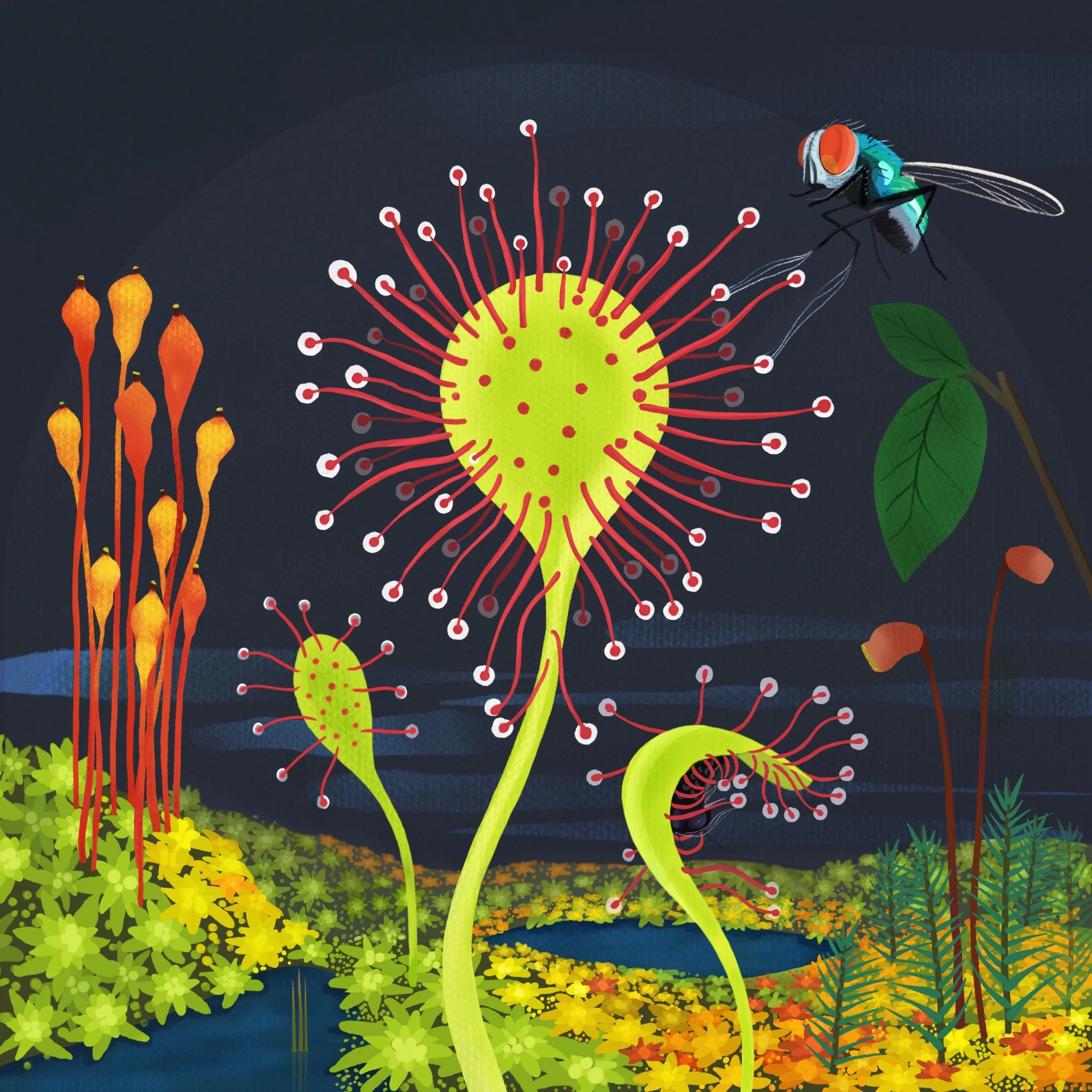
Cover artwork by Ale Silva
Summary
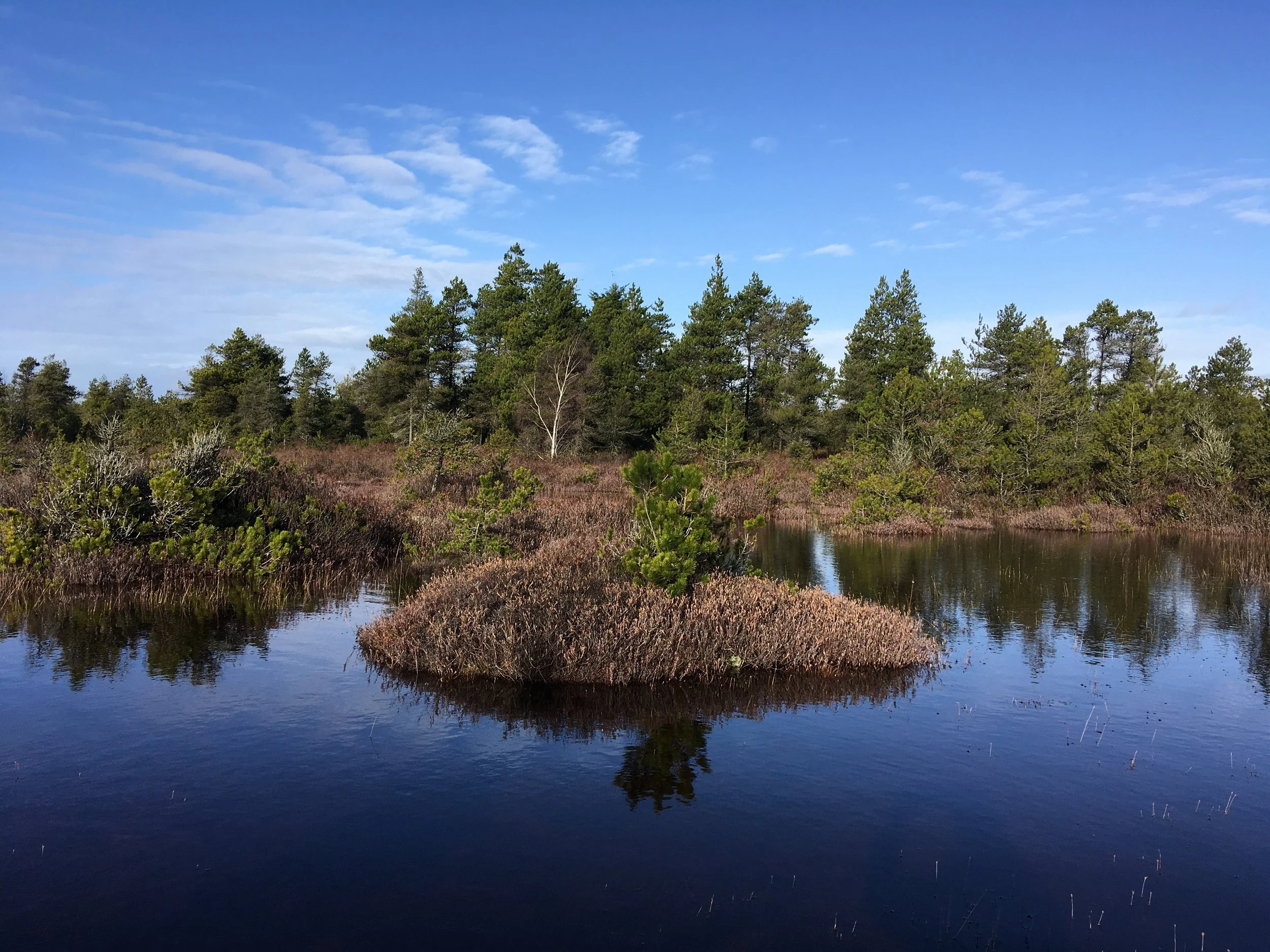
Bogs are our absolute favourite places to be. They’re not only tremendously important ecosystems, rich in exquisite biodiversity and massive stores of carbon, they’re also uniquely beautiful. These serene, colourful spaces jumble land and water into something at once both alien and familiar.
In this episode, we explore the wonders and the mysteries of peatlands, through the story of one very special (and threatened) bog just outside of the city of Vancouver. We meet the scientists who fought for its protection, and some of the folks who are studying it and working on restoring it to this day.
Plus, we answer a tricky question: should we still be extracting peat to help grow plants?
Ongoing support for this podcast comes from listeners just like you. To keep this show going, join our community at patreon.com/futureecologies
Our supporters get access to early episode releases, a community discord server, discounted merch, and exclusive bonus content.
Show Notes and Credits
Featuring the voices of Robin Annschild, Richard Hebda, Drew Elves, Markus Merkens, Sarah Howie, and Line Rochefort
Production by Mendel Skulski and Adam Huggins, with help from Eden Zinchik
Music by Thumbug and Sunfish Moon Light (and a clip from Ludwig van Beethoven).
Special thanks to the Wetland Project (Mark Timmings and Brady Marks) for the use of a clip from their incredible 24h recording of ṮEḴTEḴSEN marsh, on unceded W̱SÁNEĆ territories. They’ve also got a very cool book you should check out.
Thanks as well to the organizers of the 2024 SER North America Conference, Tony Ballard specifically.
Check out some of the wetlands Adam is building at the Galiano Conservancy Association, and Mendel’s neighbourhood wetland in Vancouver (both with help from Robin Annschild).
This episode includes audio recorded by bruce-burbank, inchadney, deleted_user_2104797, cheeseheadburger, eliasheuninck, esperar, klankbeeld, timkahn, dheming, martian, anoesj, nebulousflynn, inspectorj, thobias_groove, junggle, visualasylum, sergio-c, nakhas, lostmaiden, relenzo2, yudena, bbrocer (2) (3), wakerone, zimbot, inspectorj, chromakei, kyles (2) (3) (4), samuelgborden, lupalenzuela, nickh69, davi-sh, bockelsound, deathcarpets, g_m_d_three, brunoauzet, garuda1982, shesaystv, 190316, jonsept, liftpizzas, everythingsounds, thegeckogeek, marcy13, laurenponder, apintofmild, 1love, unfa, jo000, newlocknew, a2mediablog, reinsamba, itinerantmonk108, roninmastafx, markb, andron827, mkoenig, xkeril, vhio, volivieri, designerschoice, dhi67540, atilio_sanchez, saladsounds, qubodup, and mrkultra, accessed through the Freesound Project.
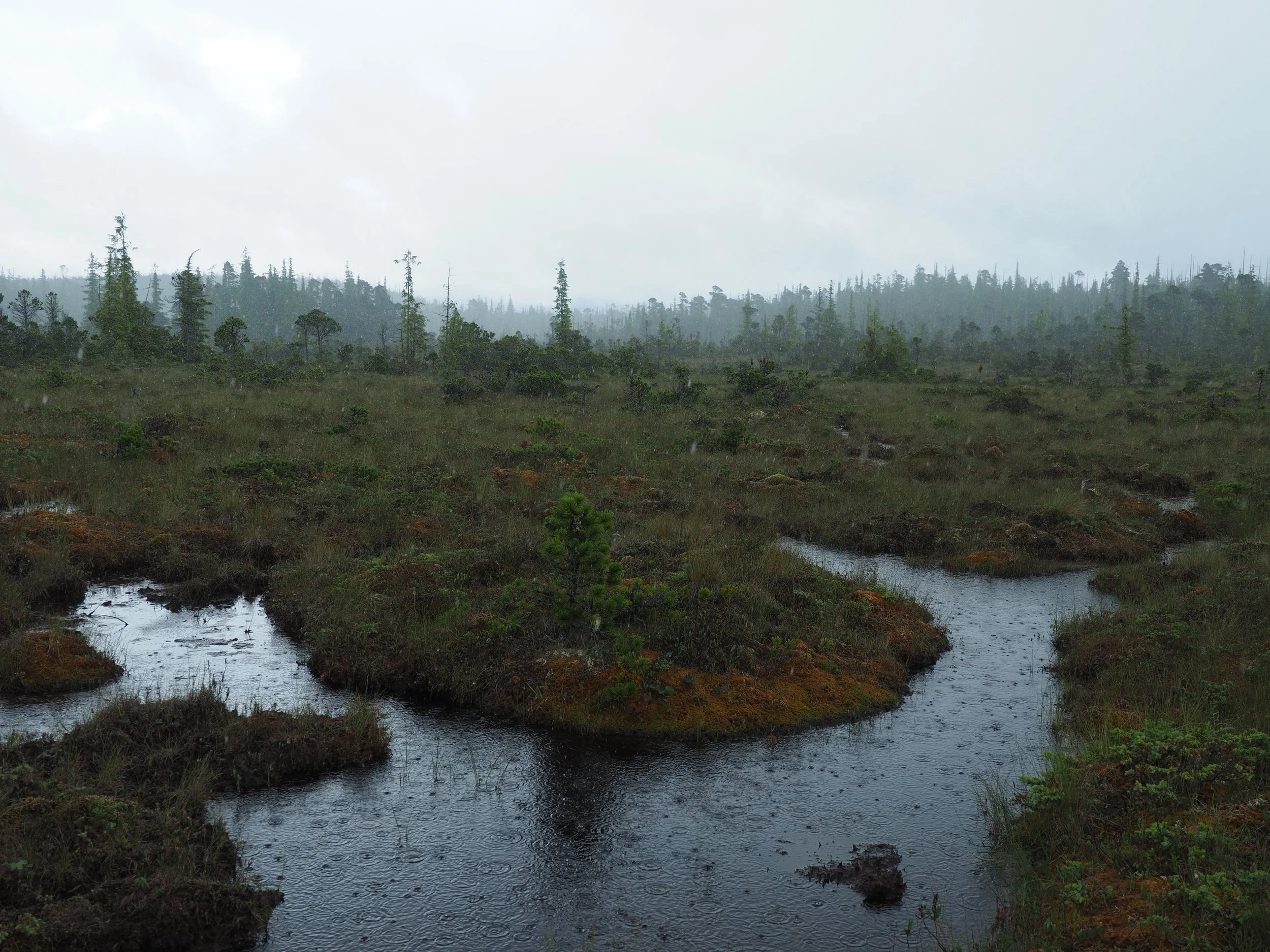
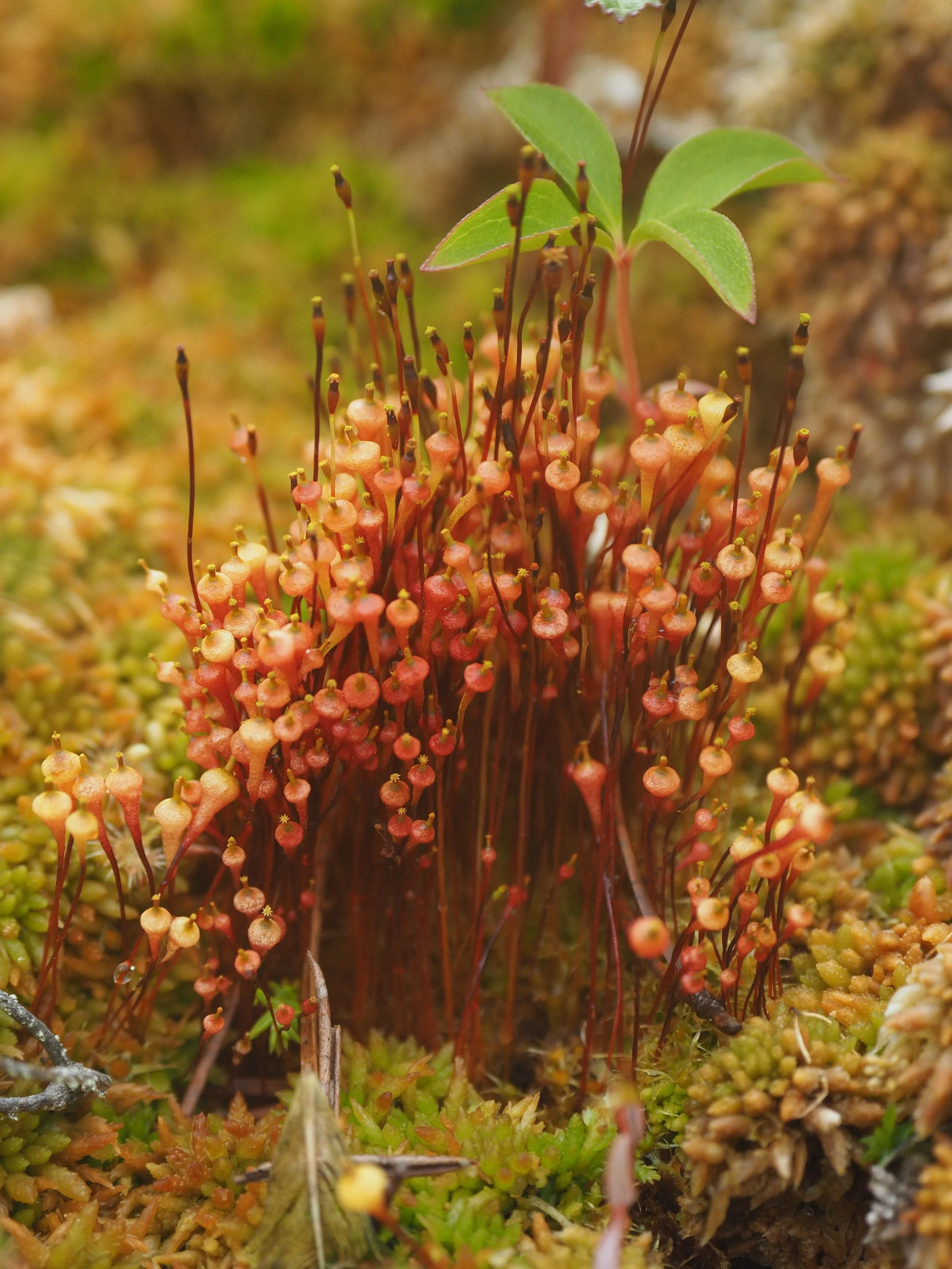
Photos

Citations
Breton, G, Boismenu, C, Rochefort, L. (2021). The horticultural peat industry and academia: A history of a sustainable partnership for the ecological restoration of Canadian peatlands. Abstract book – Oral presentations. The 16th International Peatland Congress. Peatlands and peat - Source of ecosystem services, Talinn, Estonia, pp. 337-344 (ID 72863).
Breton, G., Guêné‐Nanchen, M., & Rochefort, L. (2025). Long‐term assessment of the Moss Layer Transfer Technique for the restoration of Sphagnum ‐dominated peatlands. Restoration Ecology, e70212. https://doi.org/10.1111/rec.70212
Elves, A. (2022). Multispectral Imaging of Sphagnum canopies: measuring the spectral response of three indicator species to a fluctuating water table at burns bog. [Masters Thesis, University of Victoria].
Hebda, R. J. (1977). The paleoecology of a raised bog and associated deltaic sediments of the Fraser River delta. [PhD Thesis, University of British Columbia].
Hebda, R. J., Gustavson, K., Golinski, K., & Calder, A. M. (2000). Burns Bog ecosystem review: Synthesis report. Environmental Assessment Office.
Howie, S. A., & Meerveld, I. T. (2011). The Essential Role of the Lagg in Raised Bog Function and Restoration: A Review. Wetlands, 31(3), 613–622. https://doi.org/10.1007/s13157-011-0168-5
Paoli, R., Feofilovs, M., Kamenders, A., & Romagnoli, F. (2022). Peat production for horticultural use in the Latvian context: Sustainability assessment through LCA modeling. Journal of Cleaner Production, 378, 134559. https://doi.org/10.1016/j.jclepro.2022.134559
United Nations Environment Programme. (2022). Global Peatlands Assessment: The State of the World’s Peatlands - Evidence for Action toward the Conservation, Restoration, and Sustainable Management of Peatlands. United Nations Environment Programme. https://doi.org/10.59117/20.500.11822/41222
You can subscribe to and download Future Ecologies wherever you find podcasts - please share, rate, and review us. We’re also on Facebook, Instagram, Twitter, and iNaturalist.
If you like what we do, and you want to help keep it ad-free, please consider supporting us on Patreon. Pay-what-you-can (as little as $1/month) to get access to bonus monthly mini-episodes, stickers, patches, a community Discord chat server, and more.
Future Ecologies is recorded and produced on the unceded, shared, and asserted territories of the WSÁNEĆ, Penelakut, Hwlitsum, and Lelum Sar Augh Ta Naogh, and other Hul'qumi'num speaking peoples, otherwise known as Galiano Island, British columbia, as well as the unceded, shared, and asserted territories of the Musqueam (xwməθkwəy̓əm) Squamish (Skwxwú7mesh), and Tsleil-Waututh (Səl̓ílwətaʔ/Selilwitulh) Nations - otherwise known as Vancouver, British Columbia.
Transcription
Introduction Voiceover 00:01
You are listening to Season Six of Future Ecologies.
Mendel Skulski 00:05
Test, test one, two, Bumblebee, tuna, rabble, rabble, rhubarb, rhubarb, good to see ya. Okay, hi everybody! I am Mendel.
Adam Huggins 00:15
and I'm Adam
Mendel Skulski 00:16
and today we're joined in the studio by... a red legged frog!
Mendel Skulski 00:26
...potentially more than one red legged frog.
Adam Huggins 00:29
a chorus of randy red legged frogs, recorded with a hydrophone during their breeding season in February — in a half frozen wetland that I helped to restore a couple of years back.
Mendel Skulski 00:40
Recorded with a hydrophone, because this species only vocalizes underwater.
Adam Huggins 00:47
Yeah, otherwise, they are pretty darn quiet.
Mendel Skulski 00:49
They're adorable!
Adam Huggins 00:52
And they make this sound all night long, like up to 14 hours, pretty chatty for a creature few people ever get to hear
Mendel Skulski 00:59
Yeah, for reasons, not just that so few of us are underwater in February, but because the red legged frog has been in steep decline for many years, due largely to the loss of wetlands throughout their range.
Adam Huggins 01:15
Which is one of the reasons why Mendel, you and I share a hobby in addition to making this show.
Mendel Skulski 01:21
Yeah.
Adam Huggins 01:22
Which is that we both work to restore wetlands.
Mendel Skulski 01:26
Well, that's charitable. You work to restore wetlands. I dabble in restoring wetland. That is, one little urban wetland in my neighborhood in Vancouver.
Adam Huggins 01:38
Yeah, it's a cute wetland, though.
Mendel Skulski 01:40
I love it.
Adam Huggins 01:41
And to do that, we have both had the opportunity to work with the same remarkable woman.
Robin Annschild 01:47
What are we going to talk about?
Adam Huggins 01:49
Well, the very first thing to do is to introduce yourself. Who are you?
Robin Annschild 01:54
My name is Robin Ann's child, and I design and build wetland and stream restoration projects.
Mendel Skulski 02:03
On any given day, you're likely to encounter Robin up to her ankles in mud, sporting a hardhat and a high-viz vest, orchestrating the actions of up to a half dozen heavy machine operators — all working together to answer one important question.
Robin Annschild 02:20
what is it that we need to do in that watershed to restore a healthy relationship between the soil and the water?
Adam Huggins 02:28
And the reason that this question is so important is that we humans, of the colonial variety, have seriously disrupted that relationship basically everywhere that we have settled. Across North America, over 50% of all wetlands have been lost since the 1700s and that loss has actually accelerated in recent years, despite no net loss policies and mitigation efforts. It's even worse in some areas, like where I'm from, in California, where over 90% of wetlands have been lost. In British Columbia, that number is closer to 70%
Mendel Skulski 03:03
And when you say lost, you mean...
Adam Huggins 03:06
Drained and converted for other uses.
Robin Annschild 03:09
We have significant cultural amnesia about how we've changed these landscapes where we live. In Europe, where certainly my ancestors came from, there had already been centuries, if not millennia, of a really systematic and highly sophisticated wetland drainage.
Mendel Skulski 03:27
Because wetland is usually flat, flat land is good for building things.
Adam Huggins 03:33
Wetland is also rich. Rich land is good for harvesting timber and growing crops
Mendel Skulski 03:39
Industrializing societies all over the world tend to take places that are wet, woody, rich and wild, and reduce them to a blank slate for all kinds of development.
Robin Annschild 03:50
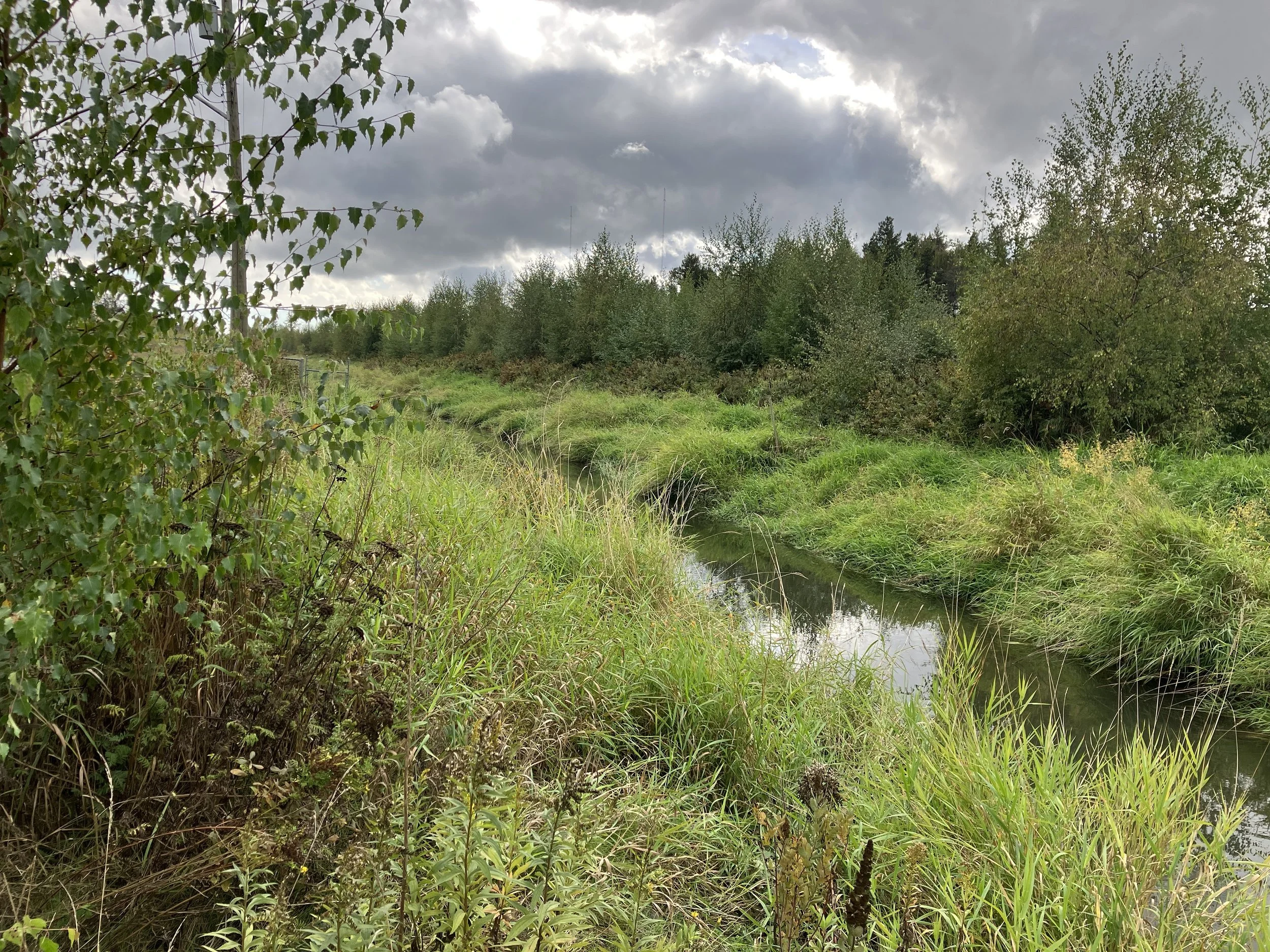
Creating those uniform conditions across floodplains is kind of the bread and butter of our way of living on the landscape, simplifying streams so that instead of being broad and flat and flooding the floodplain, perhaps on an annual basis, they are now in deep ditches that flow down a straight line, you know, on the edge of the field. It never occurred to me that the very ditches that I played in as a child, I thought that those ditches had streams in them, really, they were ditches draining wetlands, and that water that I played in in those ditches was water being drained out of wetlands.
Adam Huggins 04:29
I also have fond memories of playing in ditches as a kid on ag land that had once been in the flood plain of the San Joaquin River. The landscape changes that Robin is describing are ubiquitous.
Robin Annschild 04:41
Everything that we have done when logging, road, building, mining, converting wetlands and floodplains to agriculture, has been about hastening the passage of the water through the watershed. And now what we're looking at is, well, now wait a minute, what if we wanted to invite that water to take a more leisurely path?
Mendel Skulski 05:12
Many of our ancestors were trying to get the water off the land as fast as possible, and now here we are thinking the exact opposite. How do we keep the water on the land for as long as possible?
Robin Annschild 05:25
Wetlands, by their very nature, are dynamic ecosystems. One of the things that I find so exciting about wetland and stream restoration is that through a single action, we're achieving multiple benefits.
Mendel Skulski 05:41
Like making habitat for endangered frogs,
Adam Huggins 05:45
as discussed, and also to recharge aquifers sequester carbon, create fire breaks and mitigate the destructive power of floods.
Robin Annschild 05:55
Wetlands absorb water. Imagine if you're running a bath, and you pull the plug. And of course, you know it takes whatever time it takes for the bath to drain, but it drains pretty quickly. Now, if you were to fill your bathtub with towels, put the plug in, fill it up, then remove the plug, it's going to take a lot longer for that bathtub to drain. So when you have a high rainfall event, instead of all that rain hitting the soil, the ground, the surfaces of your watershed and running out quite quickly, the wetland is like that towel in your bathtub that's absorbing all that water and it's releasing it more slowly. The cheapest way to prevent flooding is one to protect the wetlands that exist in your watershed, and two, to restore drained wetlands in the watershed. So if anything, we need more wetlands. We need more capacity to absorb and regulate flow of water and clean surface water and inject water into the ground.
Adam Huggins 06:56
At this point, for me, this is gospel, but once Robin and the big yellow machines finish building the wetlands and they leave for greener pastures, then I'm left with the daunting task of getting native plants established again on these highly disturbed sites. Thankfully, my organization grows the plants that we need to do this, but there's been this thing nagging at me. In order to grow those plants as part of the soil mix, we typically use a product that most folks are probably familiar with. It's called peat.
Mendel Skulski 07:31
You know, peat. Fluffy, porous, great for growing blueberries, tasty in scotch, and famously, comes from bogs,
Adam Huggins 07:42
Bogs, which are, as a matter of fact, wetlands.
Mendel Skulski 07:47
Is that a bit circular? That's a bit circular.
Adam Huggins 07:52
It's not ideal. And so my colleagues and I have been asking ourselves this pesky question — whould we really still be using peat to grow our plants for restoration wetland restoration?
Mendel Skulski 08:06
Seems like a simple question. How hard could it be to answer?
Adam Huggins 08:10
How hard indeed, well, on today's episode, For Peat's Sake, we tell the story of peatlands in North America through one remarkable wetland and attempt to answer a seemingly simple question. But you know what happens to simple questions around here, right?
Richard Hebda 08:27
This sounds like it would be just an interesting sort of ecological exercise, right? But it became a very, very big political issue.
Mendel Skulski 08:40
Come on in, the water's fine
Introduction Voiceover 08:47
Broadcasting from the unceded, shared and asserted territories of the Musqueam, Squamish, and Tsleil-Waututh, this is Future Ecologies – exploring the shape of our world through ecology, design, and sound.
Adam Huggins 09:30
To get to know peat, you have to get to know bogs. And so we're going to get all up in the business of the most charismatic bog that I know. If you were to visit Vancouver, nestled between the snow capped mountains of the coast ranges and the Salish Sea. First, you should say hi to Mendel.
Mendel Skulski 09:48
I live here!
Adam Huggins 09:49
And then you should head south across the north and south arms of the Fraser River through the suburb of Richmond, and you will see heavy industry highways, subdivisions, farmland, until you hit the largest undeveloped urban land mass in North America.
Mendel Skulski 10:07
And you're thinking undeveloped... urban... land mass, what does that mean?
Adam Huggins 10:13
It's a good question. It basically means, I think, that it's a massive wild land in a major urban center, but that it's not a park. There is no public access here.
Mendel Skulski 10:25
This undeveloped urban land mass is actually an enormous, raised bog.
Adam Huggins 10:31
A big, beautiful bog by the name of Burns. Burns Bog. And since it's nearly impossible to access for most people living here, Burns Bog is actually kind of a big black box. A big black box that every so often bursts into flames.
News Announcer 1 10:55
Fire crews launched a rapid attack from the air and ground today in the hopes of knocking down a fast growing brush fire that sparked in Burns Bog along a stretch of Highway 17 in Delta.
News Announcer 2 11:06
With an ecological treasure at risk, fire crews in Delta, BC, threw everything they had today at the flames in Burns Bog
News Announcer 3 11:13
but it is a difficult fire to fight, and officials say that it could continue to burn for days.
Man on the Street 11:18
Remember the big fire they had in 2005 in the bog, just hope it doesn't get as big.
Adam Huggins 11:25
So what's going on here? Well, we've got our bog, and now what we need is our bog whisperer.
Mendel Skulski 11:34
Sometimes with some stories, we have no idea who to talk to first. But for this one, all roads lead back to one man.
Richard Hebda 11:43
My name is Richard Hebda, and I am the curator emeritus at the Royal British Columbia Museum and an adjunct faculty at the University of Victoria, historically, in the biology department the School of Earth and Ocean Sciences and School of Environmental Studies. With respect to Burns Bog, I was the government scientific expert on the ecosystem review for Burns Bog, 25 years ago.
Adam Huggins 12:15
And I will say, just from my experience, it's hard to throw a rock around here without hitting one of your students or one of the students of one of your students.
Richard Hebda 12:23
We hope people don't throw rocks at them, unless it's because they're doing very good things and that people are scurrilous rogues.
Mendel Skulski 12:33
Don't throw rocks at Richard's students, Adam.
Adam Huggins 12:36
I would never! But long before, Richard had an impressive retinue of students, je was just a graduate student himself looking for a project.
Richard Hebda 12:45
I had a background in Earth history and in botany. So when I came here, my supervisor of the day, Dr Glenn Rouse said, you know, there's this bog out there in the Fraser lowland. We don't know very much about it.
Adam Huggins 12:59
And when a young scientist learns that we don't know much about a thing, it becomes almost irresistible.
Richard Hebda 13:05
This was a particularly interesting, different sort of creature, as it turns out, because Burns Bog is a raised bog, and essentially raised bogs make their own environment and essentially create circumstances by which plants that are critical in peat accumulation can thrive and continue. So the whole idea was, well, when and where did it come from? How did it arise and sort of, how does it work?
Mendel Skulski 13:35
These were the questions Richard said about answering in his PhD.
Richard Hebda 13:39
How did it get here? It's kind of simple in one way, the Fraser River brings in mud, and it filled in the shallow waters, and in doing so, those lands emerge, like the back of a whale out of the water, and in the process, as they emerge slowly, first being intertidal, seawater influence, freshwater influence. They go through a process of succession of change from lower intertidal plant communities through middle to upper intertidal freshwater marshes, as you see in the Fraser today, and then the organic matter accumulated as peat.
Mendel Skulski 14:18
Peat, which is plants, all sorts of plants in a state of arrested decomposition, because the wet conditions of this bog in progress don't allow dead plants to fully break down into soil.
Adam Huggins 14:34
Which changes the surface chemistry, and that in turn, changes the plant communities that can grow there. First herbaceous plants and then later woody plants.
Richard Hebda 14:43
So willows, red osier dogwoods, Pacific crabapple. And then those plant communities accumulate more peat, but now it's woody, and woody peat is much more acidic.
Adam Huggins 14:55
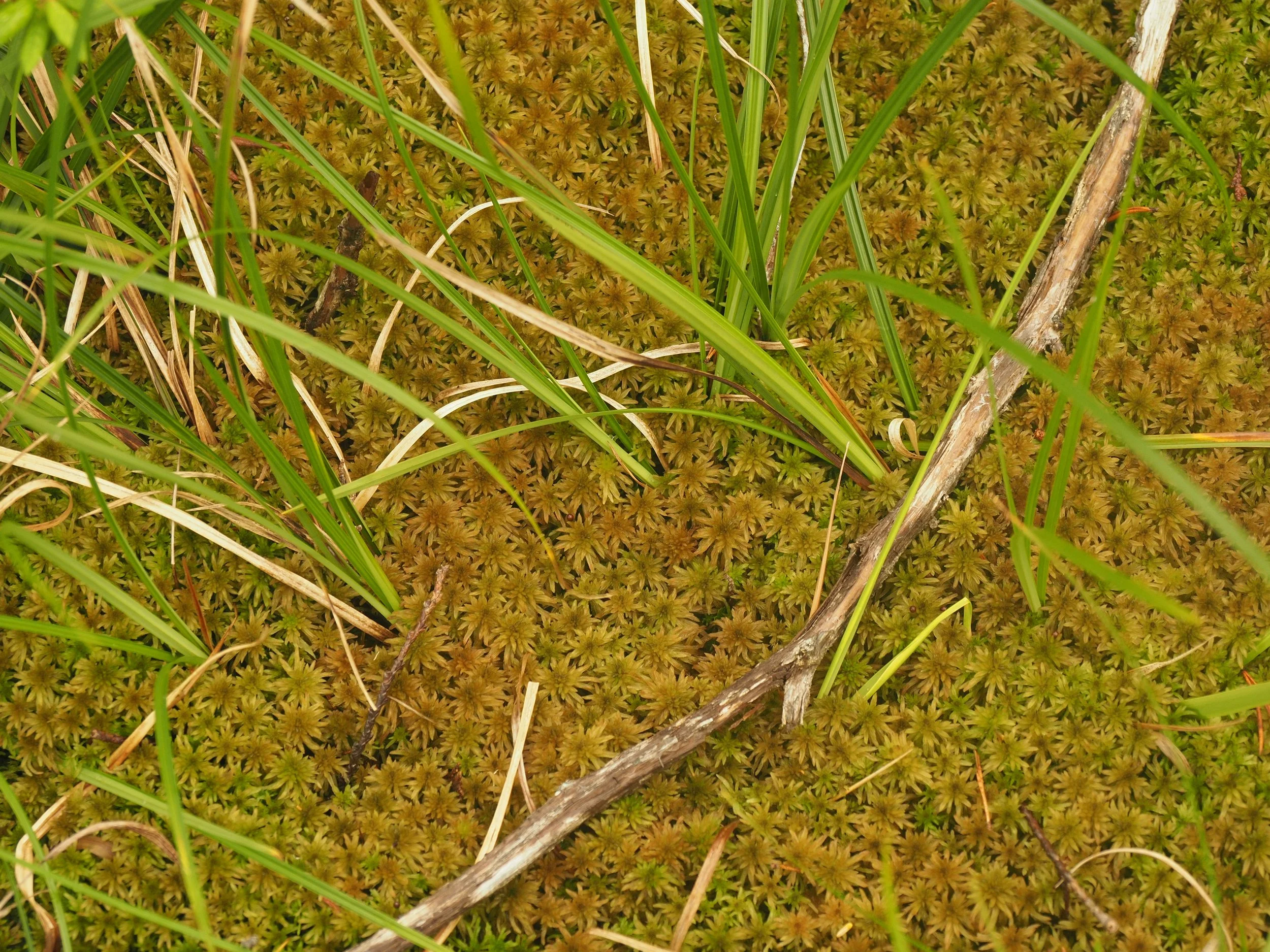
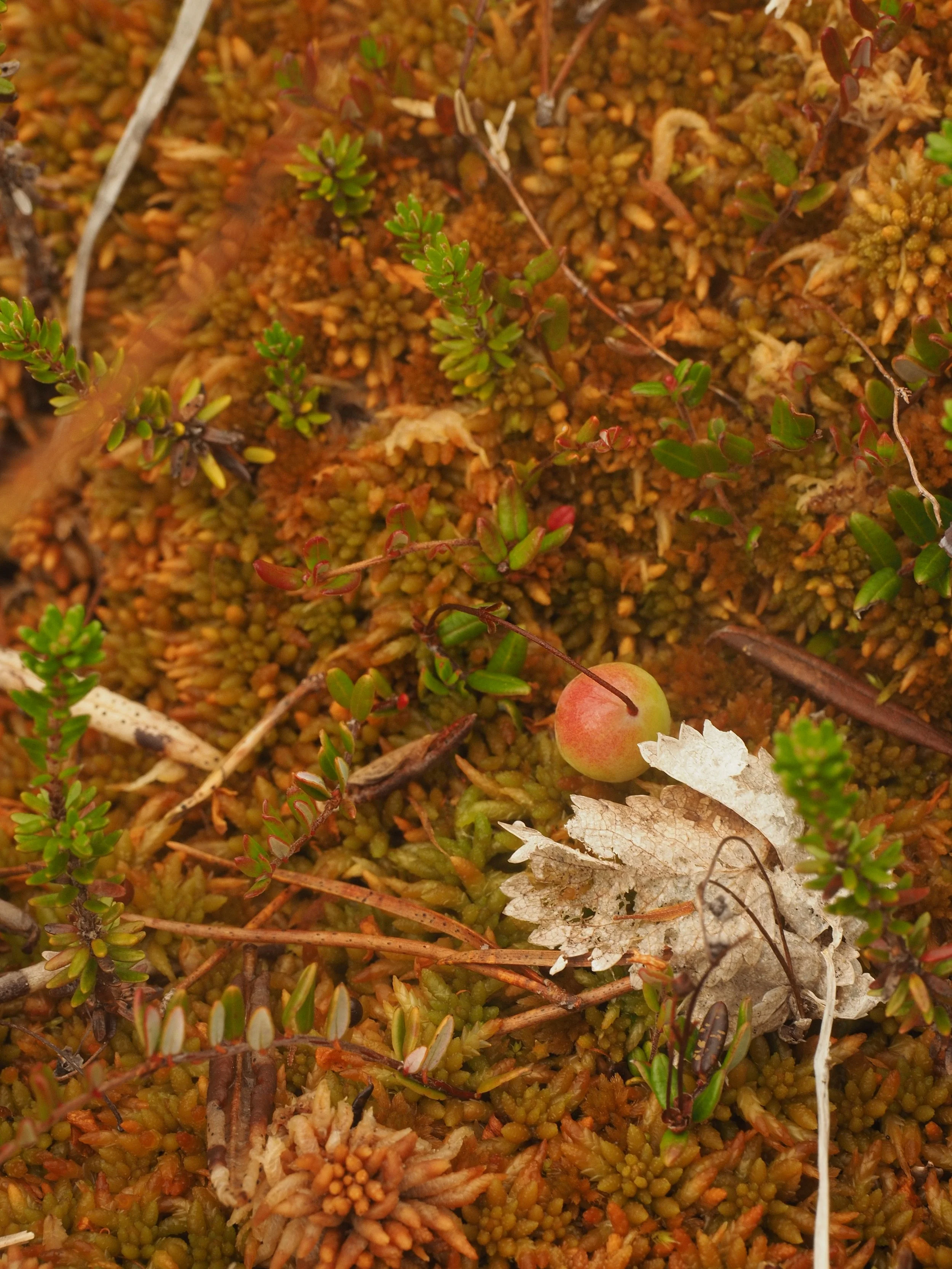
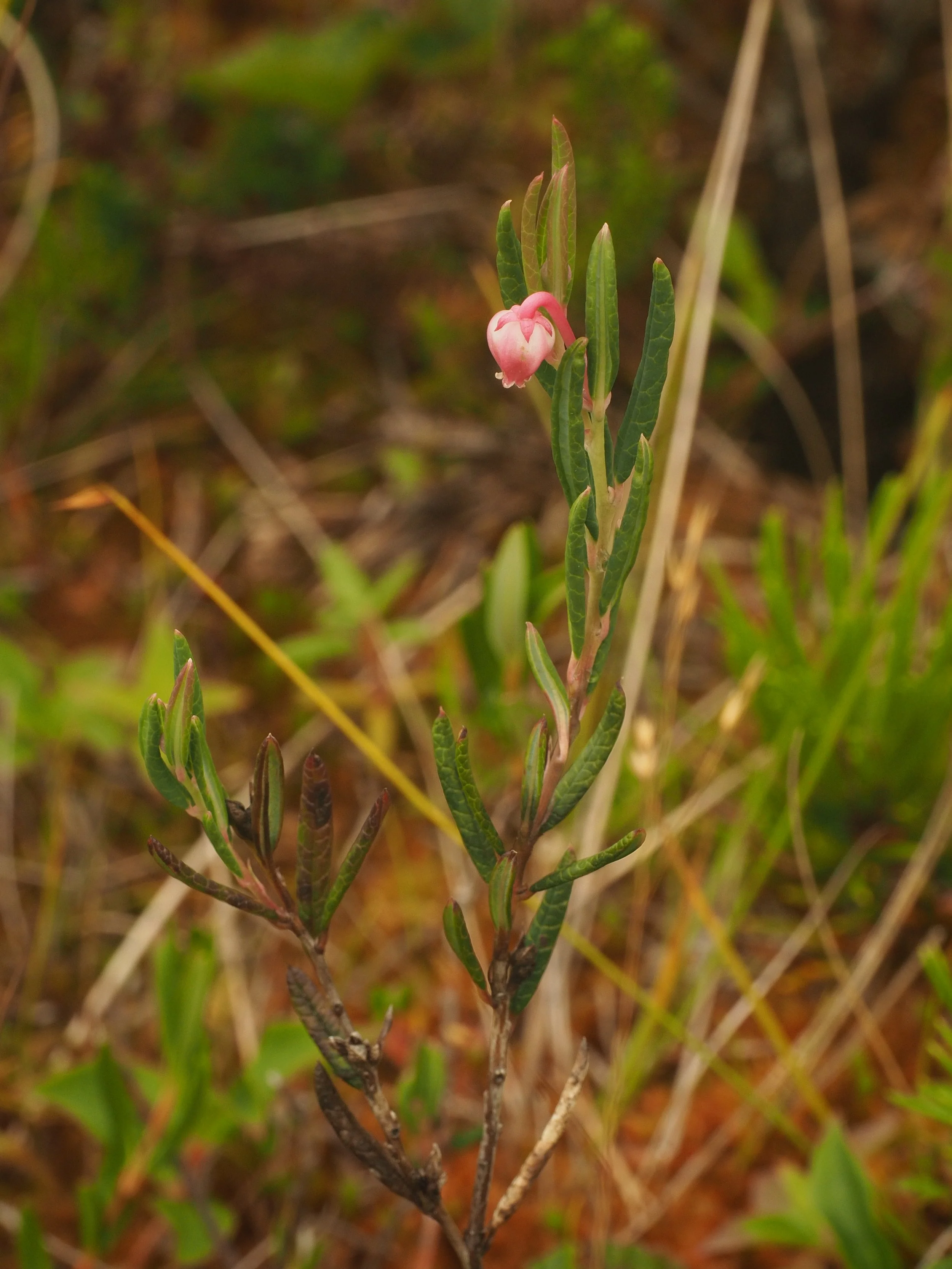
And as things become increasingly acidic, the plant community changes again. With Labrador tea, bog cranberry, bog rosemary, cloudberry, and the star of the show — a whole retinue of colorful sphagnum mosses.
Mendel Skulski 15:10
Ta da! That's the birth of a bog.
Richard Hebda 15:14
And once the sphagnum mosses begin to establish, they have all sorts of amazing tricks of organic matter chemistry, of water regulation, of being able to grow in situations where there's very low nutrients because the peat's accumulating above the water table. And then they essentially convert this wetland into their own home, in which peat mosses thrive and dominate. And once you get into that, they just keep adding more peat and more peat, as their bodies don't break down, but as they die and only partially decompose and more sphagnum mosses grow.
Adam Huggins 15:55
And over the course of about 4000 years, those remarkable non vascular plants, the sphagnum peat mosses, have essentially constructed a dome out of their own dead bodies, with a shallow living fringe on the surface.
Mendel Skulski 16:10
And because it's higher in the middle than at the edges, like a dome, it becomes... get ready for this, ombrotrophic.
Adam Huggins 16:19
Ombrotrophic.
Richard Hebda 16:20
Ombrotrophic basically means rain fed. The nutrients that enter the bog that support the growth of all the plants and all the decomposers, and then all the animals that depend on them come from the sky, and that's because the bog itself is actually above the water table, so no water flows into it, because it's higher than everything else, and it drains radially outward from the center of the bog or — sometimes they have ridges outward — from the ridges to the margin. So the only source of water and the only source of nutrients is rainwater.
Adam Huggins 17:02
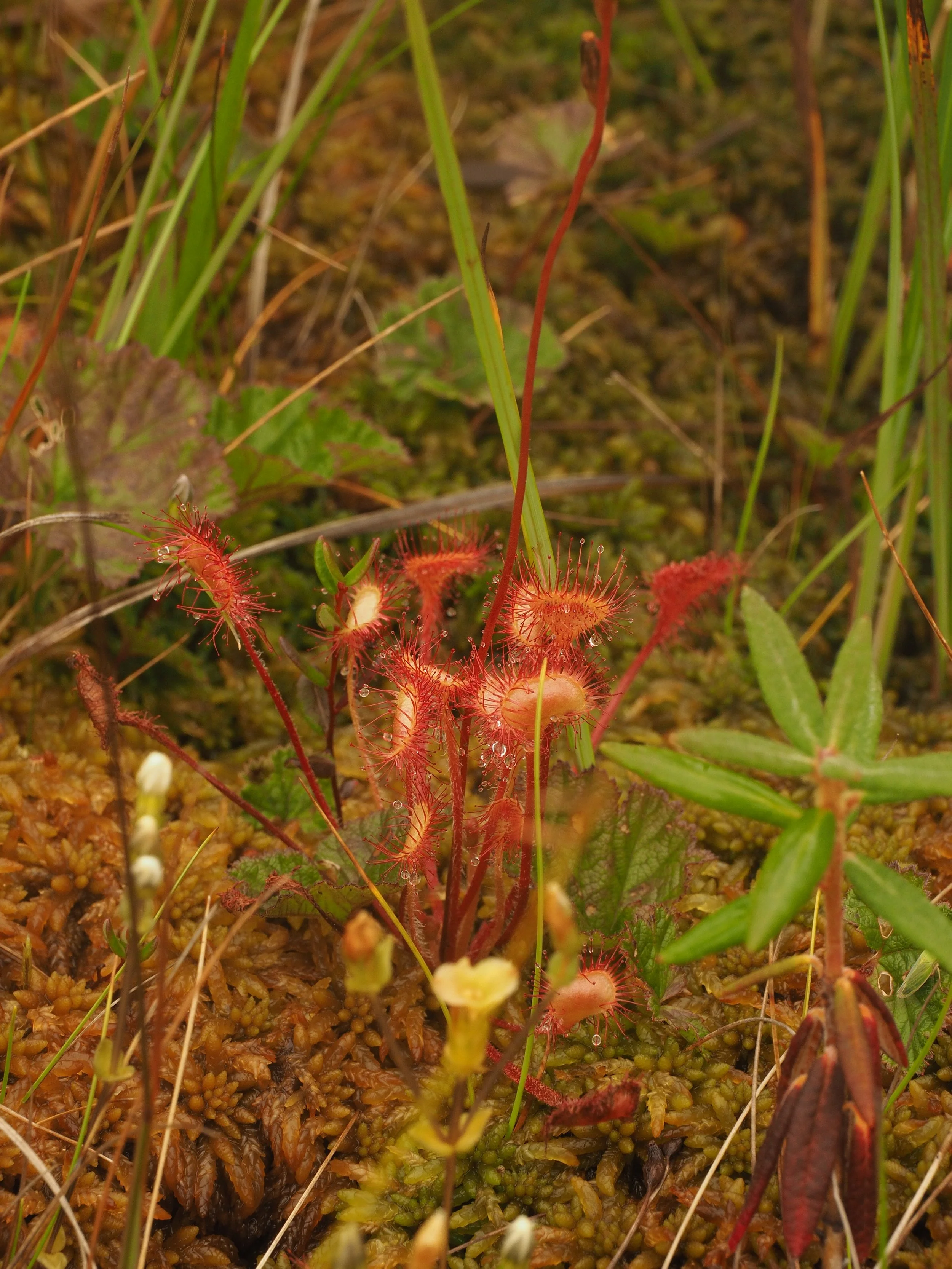
But that's okay, because the sphagnum peat likes low nutrient conditions. And the other plants that grow there, they have unique adaptations to live in this environment. For example, they learn to hunt insects.
Richard Hebda 17:15
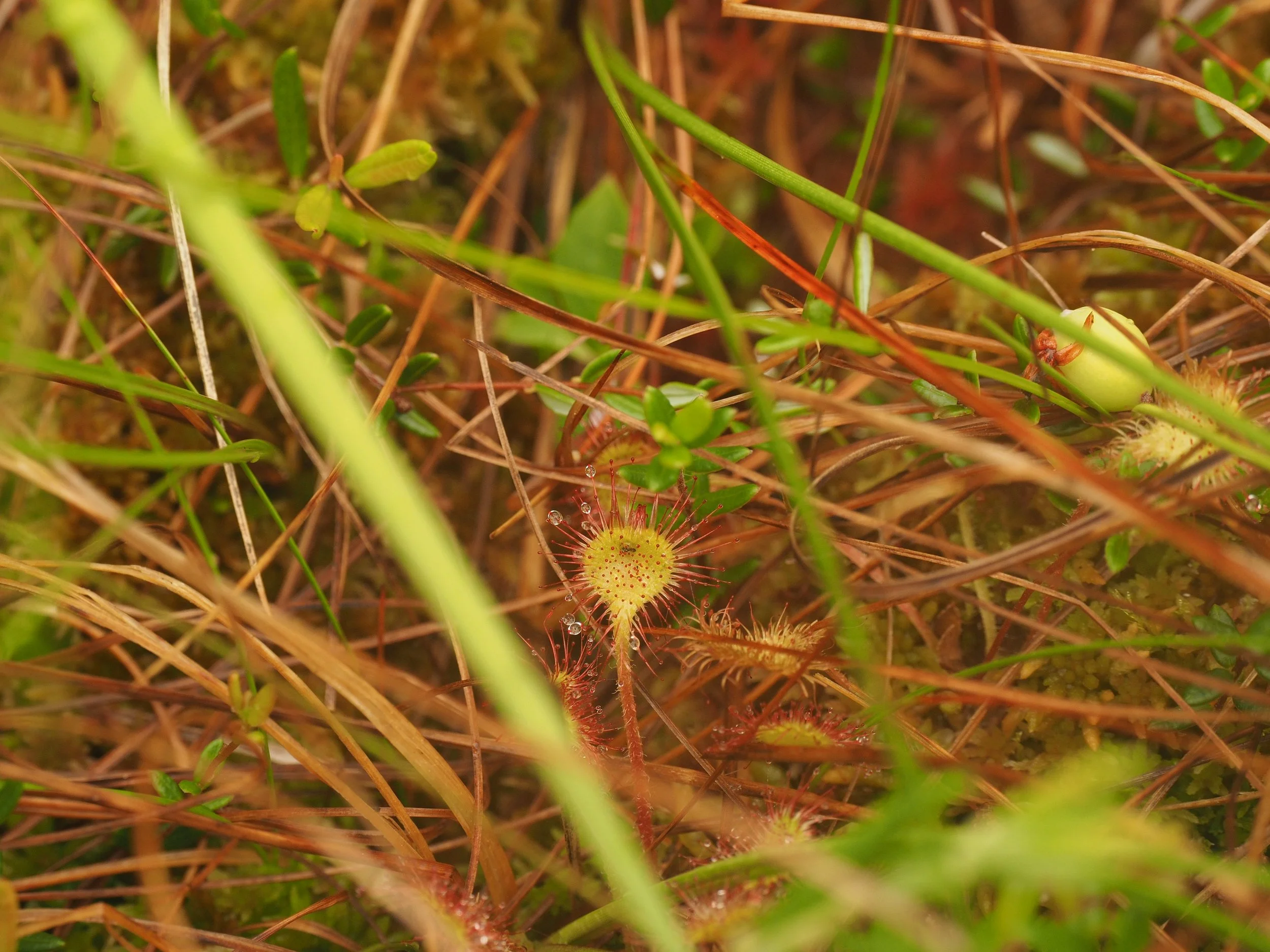
Carnivorous plants are just amazing, because they're essentially an inside out stomach, they have the digestive juices on the outside, in the case of Sundews, on these little glands with little glistening drops of fluid on the ends of the glands, and those are your digestive juices. So imagine the stomach is outside dissolves insects that fall on it.
Mendel Skulski 17:40
I love Sundews. What the hell... pitcher plants!
Adam Huggins 17:45
I know we could have made the entire episode about them, but we're not going to do that.
Richard Hebda 17:49
So that's how these plants get their nitrogen and the other nutrients that they need, because they don't get them out of the ground very much, because there aren't very much in an ombrotrophic bog.
Adam Huggins 18:00
And these unusual plants support an abundance of wildlife.
Richard Hebda 18:04
In my days, you know, almost 50 years ago, there were bears and deer and all kinds of other wildlife, much of which is no longer there —
Richard Hebda 18:12
to see a Sandhill Crane just, you know, 15 feet away from you in a ditch, just all of a sudden erupt. A bunch of them erupt! —
Richard Hebda 18:20
Like, oh my god, there's a black bear sitting in there, you know, 10 feet away from eating berries. It doesn't even know I'm there —
Richard Hebda 18:25
Then you see these majestic cranes, taking off as they do —
Richard Hebda 18:30
because you don't make any noise when you walk on sphagnum. It's cushioned.
Richard Hebda 18:35
It's being like, returned to the bosom of the bog. You are part of it, encased in part in it, cushioned by it, and you appreciate it in a way that's just exceptional. Because you hear the insects. You smell the smell of the bark, Labrador tea. You hear the birds like the Sandhill cranes, or the bumblebees flying around pollinating the cranberry flowers, these gorgeous, little pinkish cranberry flowers. You feel it, you smell it, you hear it, it's all there, and you feel as if you're part of it.
Mendel Skulski 19:23
These are all reasons why, for Richard, bogs are more than just ecosystems.
Richard Hebda 19:29
The biosphere converts part of the Earth into essentially a superorganism. As we in our own bodies have systems that work together and feed each other and support each other, this macro organism, raised bog does exactly that same thing, the multitude of species and multitude of processes on a huge landscape, that's why I like bogs.
Mendel Skulski 19:59
And Burns Bog is just one very southerly representative of the bogosphere, if you will, a patchwork that blankets the northern parts of the entire world.
Adam Huggins 20:10
Burns Bog is also representative of many bogs for another reason entirely. It has a long and complicated history of people trying to drain, farm, and fill it, because when European settlers arrived, they simply weren't content to let sleeping bogs lie.
Richard Hebda 20:30
Settler history goes back to basically people trying to farm the land. They dug these ditches going into the bog, and they were visible when I was there, or that were invisible sometimes and you would just fall up to your waist in peat and water
Adam Huggins 20:46
Kilometers and kilometers of ditches, just like those that we discussed with Robin earlier. Speaking of which, Mendel, you want to know how you can get a bog named after you?
Mendel Skulski 20:56
Ooh, how?
Adam Huggins 20:57
Try, mostly unsuccessfully, to get rid of it. Burns Bog is named after one Dominic Burns, a rancher who did his damnedest to drain it.
Richard Hebda 21:07
And that sort of went on for a while, until the Second World War.
Mendel Skulski 21:13
The Second World War, of course, interrupted all sorts of settler agricultural activity and also created whole new economies, including the use of peat moss for military first aid.
Adam Huggins 21:26
Antiseptic and absorbent.
Richard Hebda 21:28
There was quite a bit of extraction at that time for basically military purposes, but eventually that became converted to the extraction of peat moss for horticultural purposes. And when that came around, then there was this huge extraction of peat from the middle of the bog. It's organic material. The peat, predominantly sphagnum peat, was removed so the heart of the bog was taken out. But like my bald head, there was active living peat communities all around the edges, and they essentially sustained the bog, even though the middle had been taken out, and maintained the water chemistry in the middle, so that the sphagnum mosses came back, essentially in a giant pool, or a giant reticulate network with ridges of peat that remained in open pools.
Mendel Skulski 22:18
So I guess you can actually teach an old bog new tricks.
Adam Huggins 22:23
Yes. But meanwhile, more mischief was afoot.
Richard Hebda 22:26
At the same time as the inside of the bog was being exploited, dug out, people were nibbling on the edges, converting — conversion irreversible.
Mendel Skulski 22:39
All around the bog, chunks of the edges were being developed.
Adam Huggins 22:43
There was the railroad construction, and then the road road construction,
Richard Hebda 22:48
A highway went through it, the one that the Alex Fraser Bridge, which, my opinion, never should have been allowed to be built the way it was, and the environmental assessment for it was utterly inadequate.
Mendel Skulski 23:00
And then there are the cranberry farms.
Richard Hebda 23:03
Some of it was converted to cranberry fields because cranberry fields have turned out to be very lucrative.
Adam Huggins 23:08
and we'd be remiss not to mention the gigantic landfill for the City of Vancouver.
Richard Hebda 23:13
One of my study sites is now under the dump.
Mendel Skulski 23:16
Meanwhile, peat extraction technology was advancing.
Richard Hebda 23:20
Later on, when they got very sophisticated, they would just cut the trees off, and scrape it off and then suck the peat through giant vacuum cleaners.
Adam Huggins 23:28
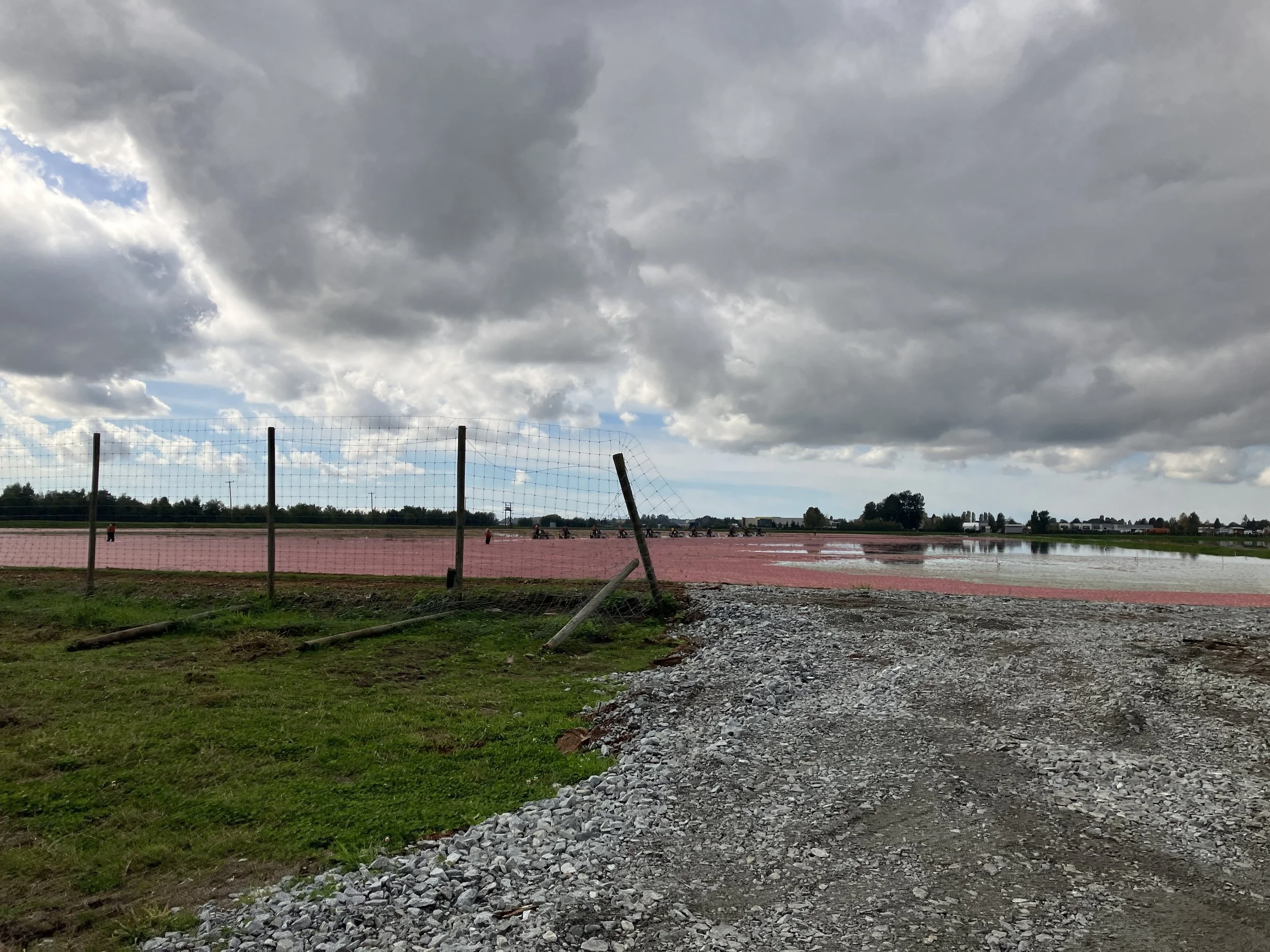
Incidentally, cranberries are also harvested by giant vacuum tubes. I have seen it myself.
Richard Hebda 23:34
More sucking. There's a lot of sucking involved,
Adam Huggins 23:38
And all of this draining and scraping and dumping and sucking kept eating away at the edges of the bog, but no one seemed to put it much of a fuss. Parts of it would periodically burst into flames. But like so what?
Richard Hebda 23:52
It's just a bog. Who cares? Bog, three letter word for bad things. Because, of course, everybody thinks they're horrible places. They don't value them and they don't even understand them. They just throw more garbage on top of them.
Adam Huggins 24:05
And some major industrial development proposals were floated for the bog.
Richard Hebda 24:09
At that time, which was, I think, in the mid 80s. The idea was they would dig the bog out and fill it with sand from dredging of the Fraser River, and then build a huge megaport.
Adam Huggins 24:23
That didn't pan out. And so then a 2500 acre industrial development was proposed, and then a horse racing track, and then the Pacific National Exhibition, an amusement park, basically.
Mendel Skulski 24:36
But by the 90s, some folks were beginning to recognize the value of the bog and just how threatened the remainder was.
Richard Hebda 24:45
There was a very strong community group with very skilled and capable people and knowledge who could make the case that this place shouldn't be filled and turned and burned and whatever else.
Adam Huggins 25:00
Finally, following years of public pressure and failed development proposals, the province of BC agreed to undertake an ecosystem review of Burns Bog, and they asked Richard to lead it, which initially he was hesitant to do.
Richard Hebda 25:15
But the bog had spoken to me a long time before, and I thought, okay, well, I owe it to this, these creatures, this amazing place, which gave me my future, which gave me my job, and has sustained me, has supported my curiosity. I am at one with the bog, and therefore, if I am at one with the bog, then I must be the bog. That's the way I looked at it. So I said, I'll do it.
Mendel Skulski 25:47
And to make a long story short, he and a handful of other scientists did it! In just eight months.
Richard Hebda 25:54
You know, I pulled it off. I did it exactly as it should be done in open public forum, with the scientists reporting — people like Ian McTaggart Cowan, who was just unbelievably powerful when he came. Now, Ian McTaggart was the zoologist of British Columbia, a tall man with a powerful voice, and he just said that red mouse — the red back vole — that red mouse, the last time it was seen in British Columbia was in the UBC endowment lands. And I and my wife saw it in the late 1940s.
Adam Huggins 26:30
When the report was finally published, the conclusion was stunning. It stated that the vast majority of the remaining bog area, over 2000 hectares, would be required to preserve its viability and sustain its processes. And when it came down to it, Richard was called upon once again, this time by the lawyers, to actually delineate the area that would ultimately be protected, which was a real crisis for him as a scientist.
Richard Hebda 26:58
At that point, I truly understood that you cannot be an objective, dispassionate scientist. You cannot be one. Just as we face the future of climate change, we have to make the choices and the decisions and not leave for the government to make or for an industry to make. We have to work to make the best decisions that are possible, and so I did it. So I drew the lines.
Mendel Skulski 27:26
And from those lines would eventually emerge the Burns Bog Ecological Conservancy Area, managed by Metro Vancouver and the City of Delta to maintain it in perturity. The bog had been drained and sucked, battered and bruised, but now it had a fighting chance at life.
Richard Hebda 27:43
You know, why would you fill it and kill it? Why would you not think of it as one of the most biologically spiritual creations on the Planet Earth.
Adam Huggins 27:56
The fate of one of the most biologically spiritual creations on Planet Earth, and I promise eventually an answer to our question about peat. That's after the break. Now, if you excuse me, I have to go see a man about a bog.
Mendel Skulski 28:23
Hey, if you're enjoying the show, check out futureecologies.net/support — thanks!
Adam Huggins 28:42
Driving down this old gravel road. On my left, Burns Bog. On the right, cranberry farm, actively harvesting... group of men out in waders, water up to their waists, with a giant vacuum hose sucking the cranberries that are floating off of the water surface and into a giant bin. Wild. And another gate. I think this is the third gate. Gates everywhere.
Mendel Skulski 29:13
Wait, I didn't get to go along for this ride. I feel so left out. I thought you said members of the public couldn't actually get in to Burns Bog.
Adam Huggins 29:22
I mean, they generally can't, except for a tiny piece called The Delta Nature Reserve, which is nice to visit if you can. But I am no ordinary member of the general public, Mendel. I have special clearance — from a friend who got me inside.
Adam Huggins 29:37
I don't think I have ever eaten a fresh cranberry right off a bush.
Drew Elves 29:41
Not a cultivar.
Adam Huggins 29:42
This is native?
Drew Elves 29:43
Yeah.
Adam Huggins 29:49
that is delicious
Drew Elves 29:51
Tart though, huh?
Adam Huggins 29:52
Oh, but I love things that are sour. Oh my god.
Drew Elves 29:54
That's good.
Adam Huggins 29:55
I love sour things.
Mendel Skulski 29:58
Ah, yes. You were there to see your good friend... the cranberry.
Adam Huggins 30:04
Of course, and my colleague, Drew Elves.
Drew Elves 30:07
I teach at University of Victoria in the Restoration of Natural Systems program and in the School of Environmental Studies. I am ecohydrologist by training, a peatland ecohydrologist with a focus on sphagnum mosses.
Adam Huggins 30:21
So I'm standing out there in the bog with Drew, bobbing up and down on this thick mat of peat in the sun.
Mendel Skulski 30:28
No, I'm not jealous. Thanks for asking.
Adam Huggins 30:32
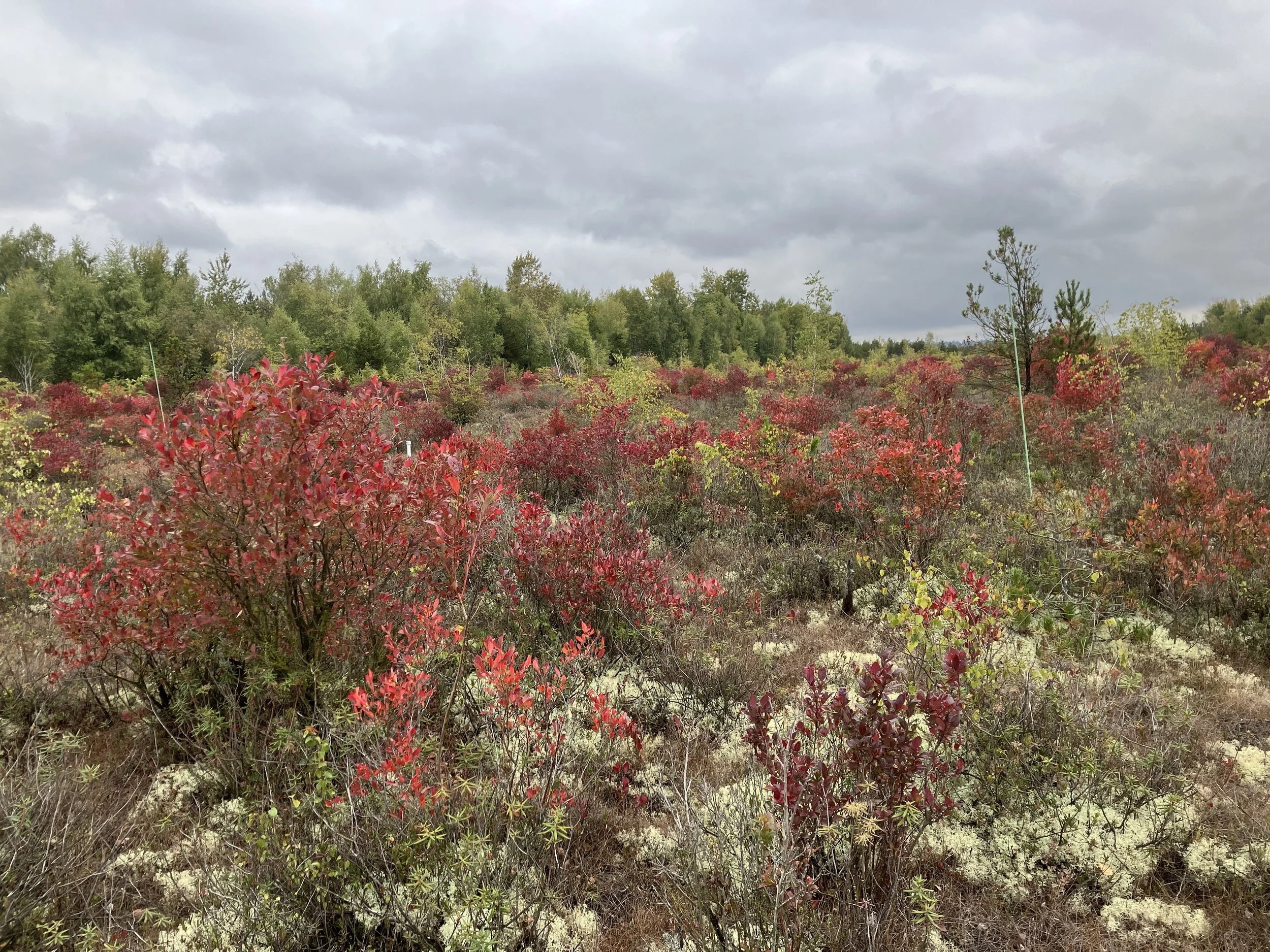
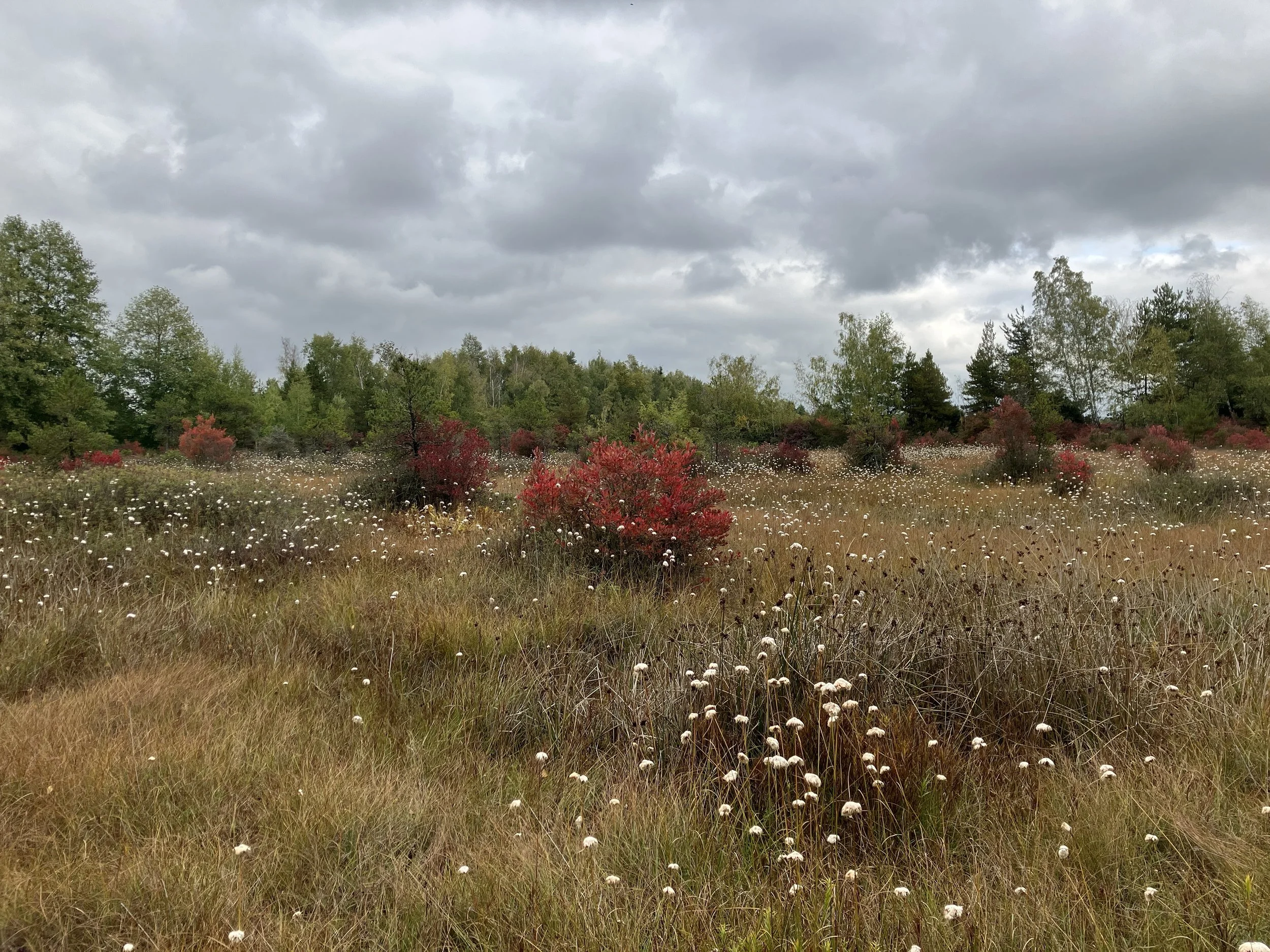
And we're looking at this wild variety of colors all around us.
Drew Elves 30:37
Like, we're looking at this field right now, and there's a cornucopia of color, right? There are so many greens, so many reds, so many buffs.
Adam Huggins 30:45
And these colors we're seeing, they tend to correspond to different species of sphagnum moss.
Drew Elves 30:50
There are 12 documented species
Adam Huggins 30:54
Growing in slightly different parts of the mossy landscape, the hummocks and the hollows.
Drew Elves 31:00
The ones that make the hummocks, they are slow growing and they're recalcitrant, meaning they don't readily decompose. These recalcitrant hummock species are really resilient. They can take up water and stay moist much further into the drought period than hollow forming species. The Hollow forming species, though, they'll grow really fast, but then they don't have the specific phenolics, meaning they don't have those chemicals that impede breaking down. They're not robust in that way. They decay.
Mendel Skulski 31:31
Tag yourself. I'm the not-so-resilient fast grower.
Adam Huggins 31:35
I'm recalcitrant, slow and stubborn all the way.
Drew Elves 31:38
So it's two very different traits. One's a hare, one's a tortoise. The hare are the hollow growing species. They'll grow really fast during a time when moisture conditions are right and temperature conditions are right, and they'll grow really quickly. So because of that, they are lateral growers. Whereas these hummocks, they slowly build up. They have this like apical bud, meaning a topmost layer where they keep growing from. And so they just keep growing higher and higher.
Adam Huggins 32:01
So it's a beautiful, diverse bog scene. But at the same time, this is a part of the bog that was harvested and prepared to be a cranberry farm before it was abandoned. It's still recovering from that disturbance.
Drew Elves 32:15
The hydrology has been brought back to within historical bounds, and that means that peat forming processes have been reinitiated
Adam Huggins 32:24
and Drew is there studying that recovery.
Mendel Skulski 32:27
How is he doing that?
Adam Huggins 32:29
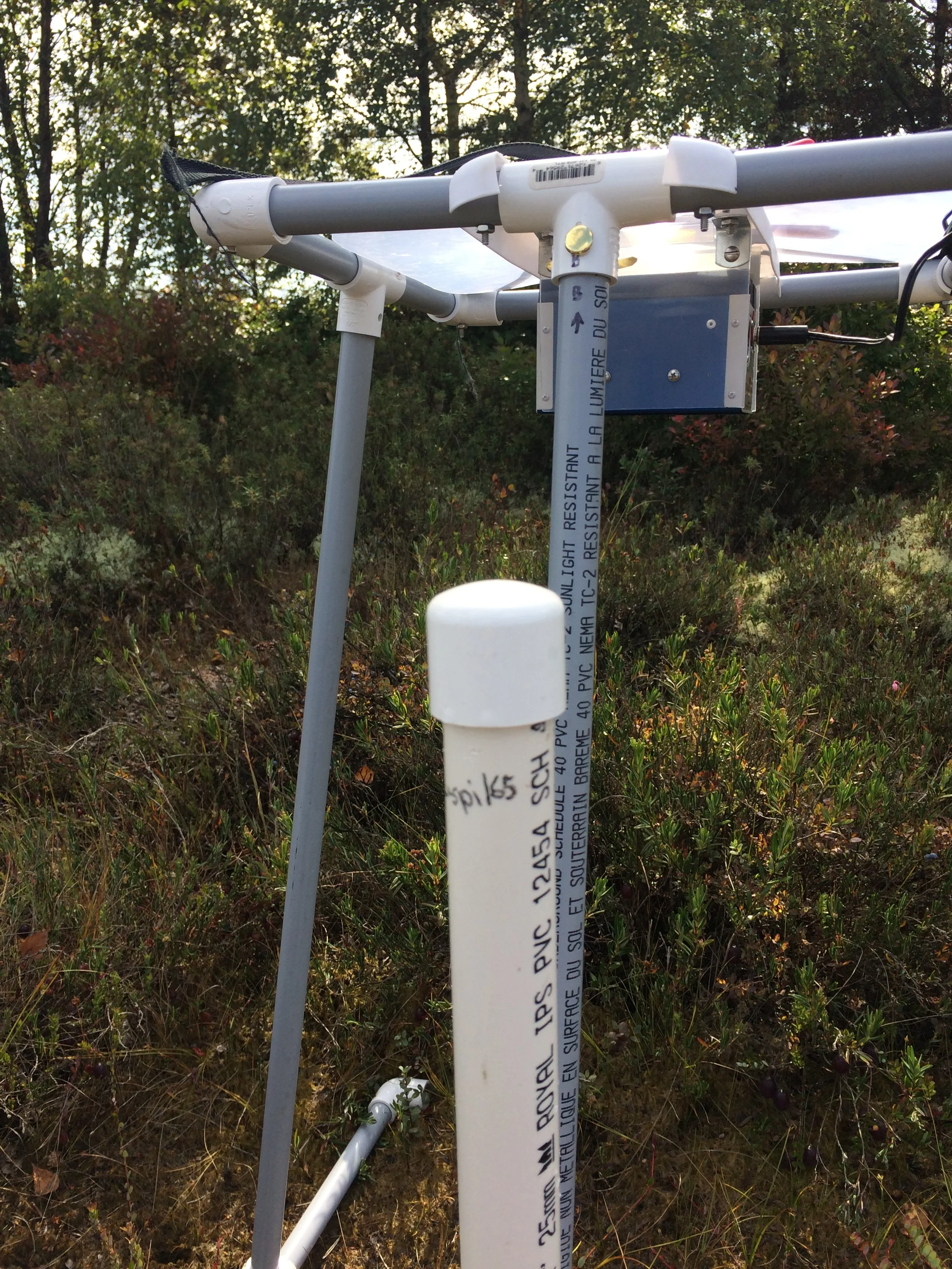
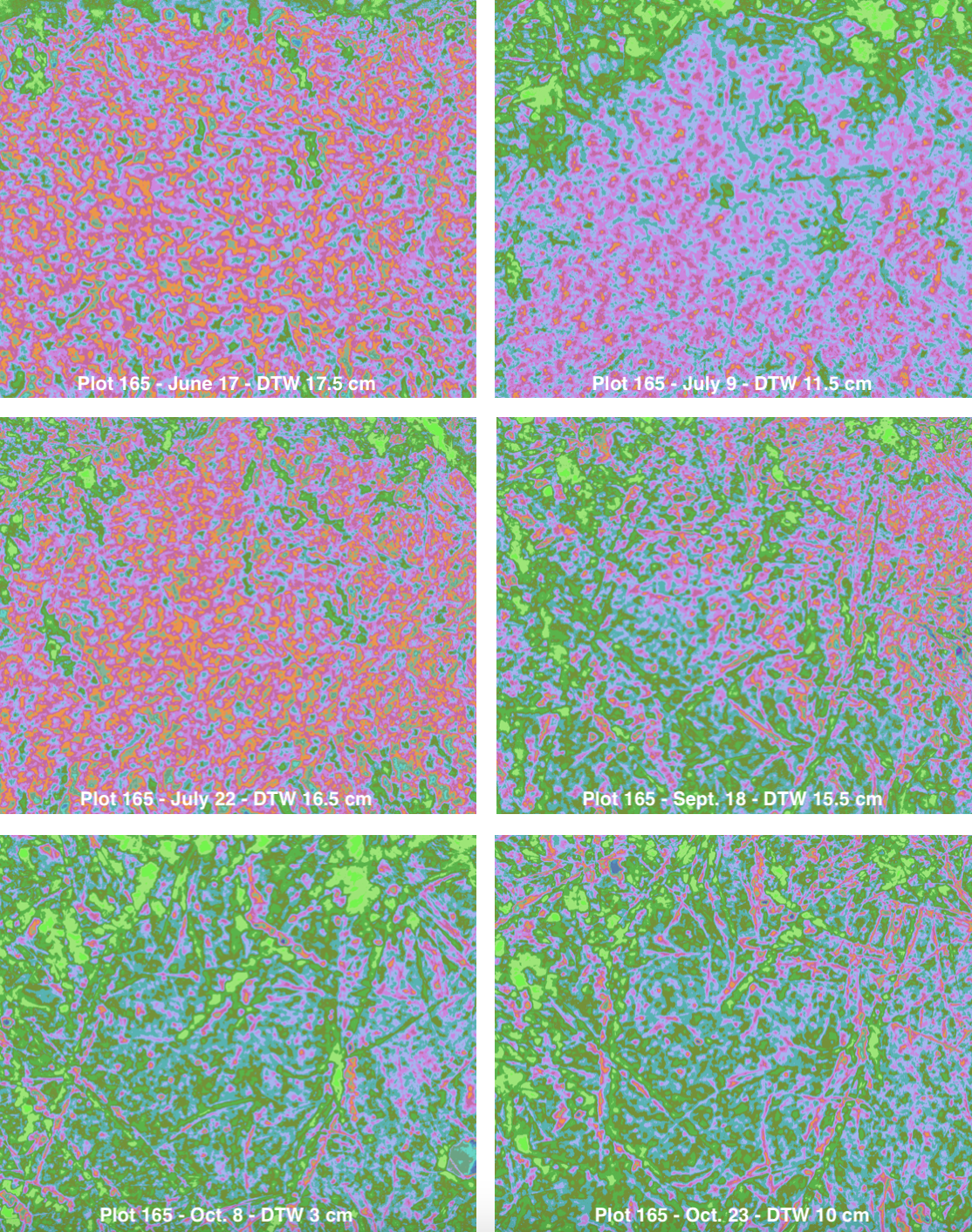
With light and a very, very nice camera pointed directly at the ground.
Drew Elves 32:35
We can take the properties of light. The sun comes in, and it encodes a lot of information, especially for plants and photosynthetic organisms, right? What they use, what they take. Meaning, what part of the sun's light that they use at different times of year, and then what they reflect back can tell us a lot about what's happening underneath.
Adam Huggins 32:55
And just as a very basic example, when sphagnum moss gets dry, it tends to turn white, and that increases the albedo of the bog, helping reflect sunlight and cool things down a bit. That's something that we can see with just our eyeballs, but Drew is looking at what we can learn with better equipment than what nature gave any of us.
Drew Elves 33:17
The affordances we have in terms of our vision, they're not entirely objective, right? I often tell students, you know, remember that dress?
Adam Huggins 33:26
You know the dress, right Mendel?
Mendel Skulski 33:29
Ah the dress, of course I do. It's obviously black and blue.
Adam Huggins 33:35
Oh no, it's clearly white and gold.
Adam Huggins 33:37
What color was the dress?
Drew Elves 33:40
I don't answer that question, because I think as a lot of people who have a significant other, it may be led to a bit of acrimony, and so I'm not going to say what color the dress was.
Adam Huggins 33:54
So instead of relying on his merely human vision, Drew is using the NDVI.
Mendel Skulski 34:03
The what?
Drew Elves 34:04
The Normalized Difference Vegetation Index. So that's where it goes from being the dress and being subjective, to being something that's standardized and reproducible and decipherable.
Adam Huggins 34:15
And I brought us here just to say that this is a lot of what goes on in the black box of Burns Bog. It's basic science — developing techniques to better understand all bogs, by studying the recovery of this bog.
Mendel Skulski 34:29
That's so cool. And you know, how are things going?
Adam Huggins 34:33
Well, we did mention that the bog occasionally erupts into flames, right?
Mendel Skulski 34:37
We did.
Adam Huggins 34:38
And that's because those kilometers and kilometers of ditches and roads crisscrossing the bog, many of them are still actively draining it, drying it out. And a big pile of dead dry peat is a magnet for wildfire. This is the primary reason why the public isn't allowed in the bog.
Mendel Skulski 34:58
Sure that makes sense.
Adam Huggins 35:00
But in addition to researchers, there are also folks in here looking after the bog, and so I caught up with a couple of them on a group field trip on a freezing cold, rainy day. You're actually going to hear the raindrops hitting the microphone, and I just want you to know that every single one of them felt like frostbite on my hand.
Mendel Skulski 35:21
Thank you for your service.
Adam Huggins 35:22
It is also on the flight path of the Vancouver International Airport, and so there was so much plane noise.
Markus Merkens 35:31
I'm Markus Merkens. I'm a Regional Parks Biologist, and I've been working in the bog for the past 15 and a half years, trying to take care of the bog the best I can. I'm gonna pass over to Sarah here.
Sarah Howie 35:44
Sarah Howie, Climate Action and Environment Manager with the City of Delta. I've been working in the bog since the year 2000, and Markus and I co-manage the bog.
Adam Huggins 35:56
And without much further ado, they ushered us into the bog.
Sarah Howie 36:00
If you see what looks like a mud puddle, don't step there, because it's basically a sinkhole and you will fall in. That would be a fun experience for you, but we'd rather you not have to deal with that, so you can just step on the vegetation instead. It'll keep you afloat.
Markus Merkens 36:28
Bogs are incredibly complex ecosystems, and to quote a professor of mine at UBC, bog ecology isn't rocket science, it's way more complicated than that.
Adam Huggins 36:42
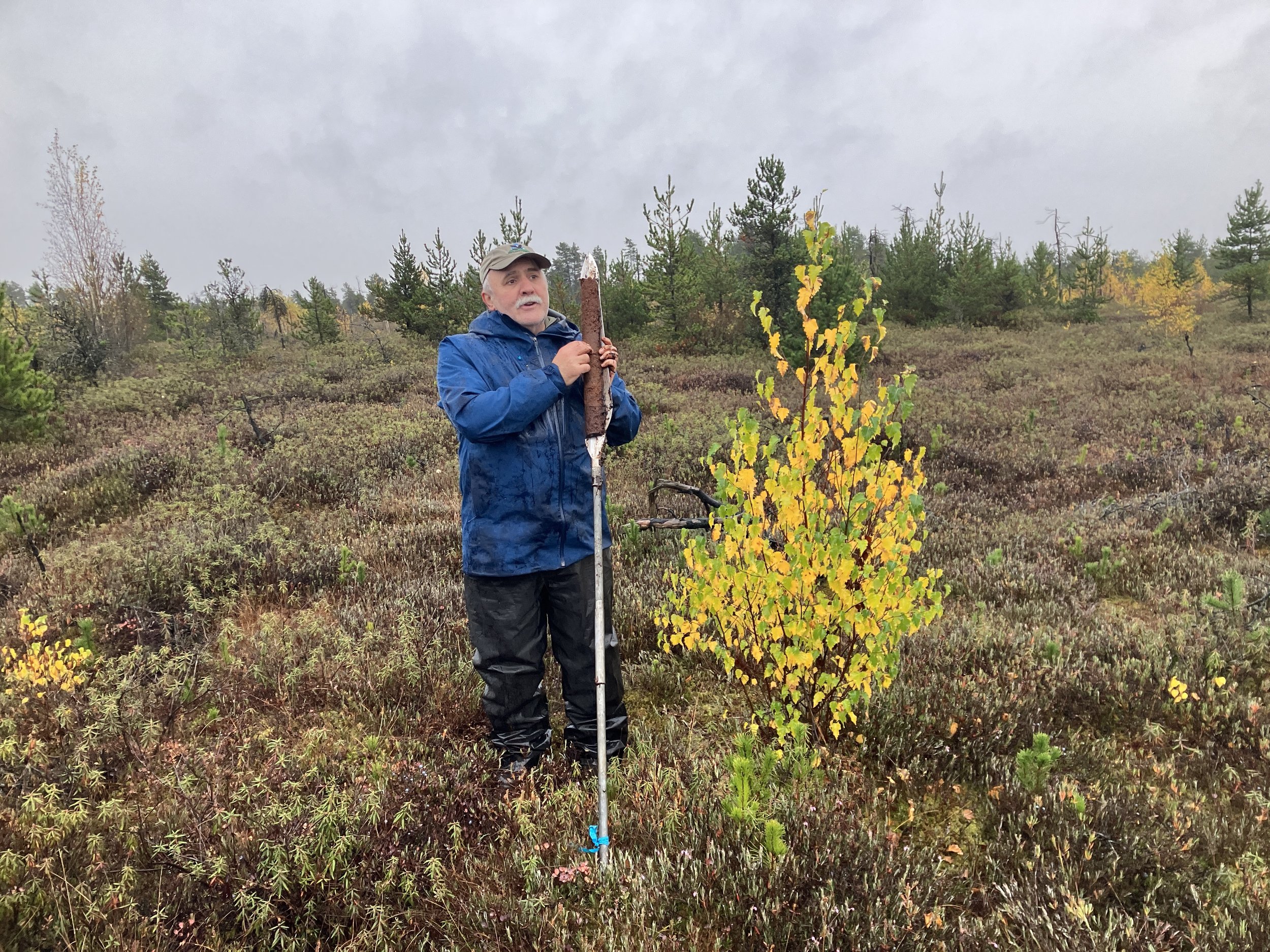
Markus told us that the peat in Burns Bog is five to eight meters thick, and to demonstrate, he pulled out a Russian peat auger.
Markus Merkens 36:57
So I've just taken a core sample of the bog. This peat is about a meter and a half below ground. This was sequestered at a time when the Vikings were exploring the eastern coast of North America. That's how long ago this was laid down.
Bog tour participant 37:16
Welcome back to the sunlight.
Adam Huggins 37:18
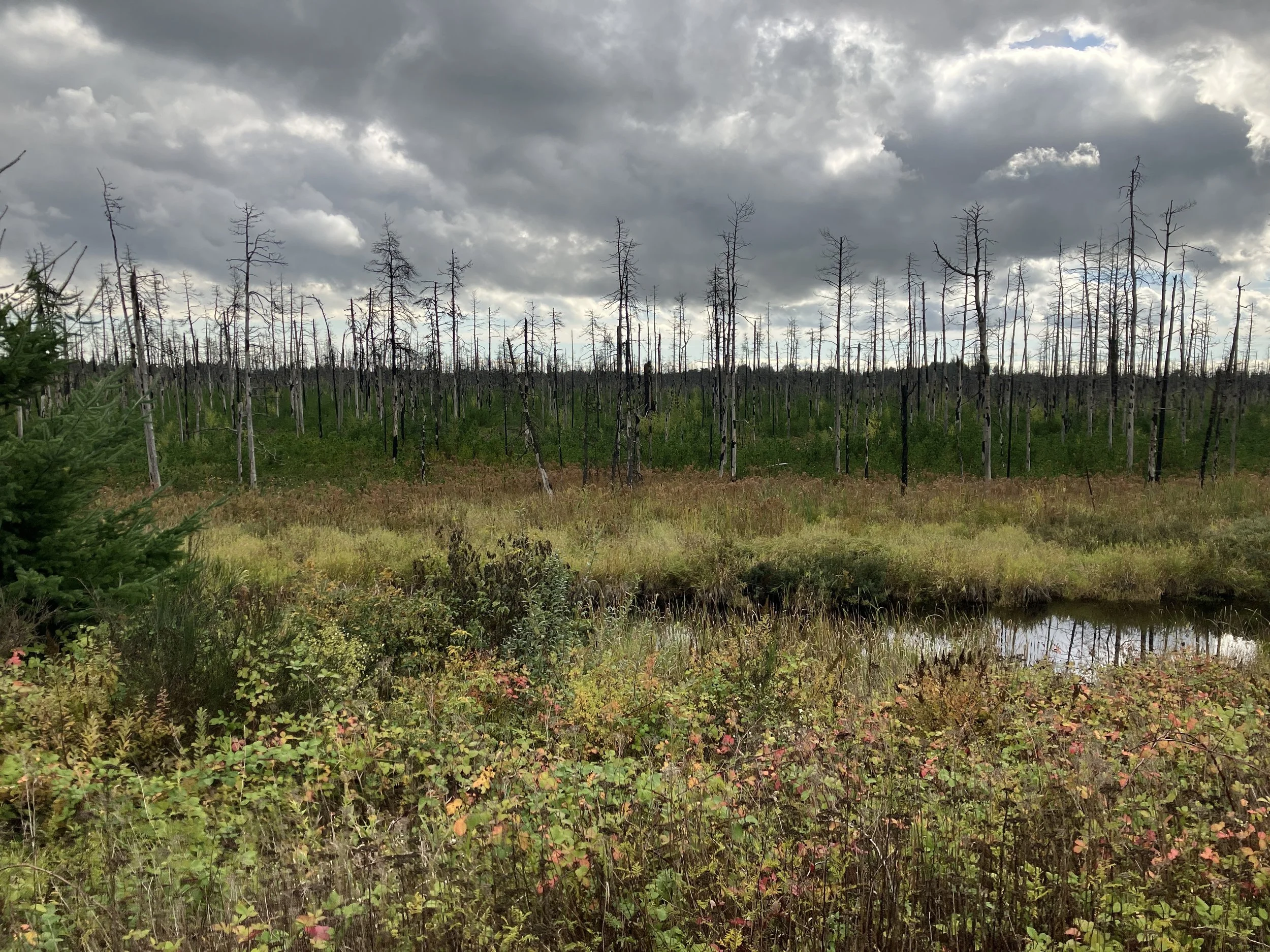
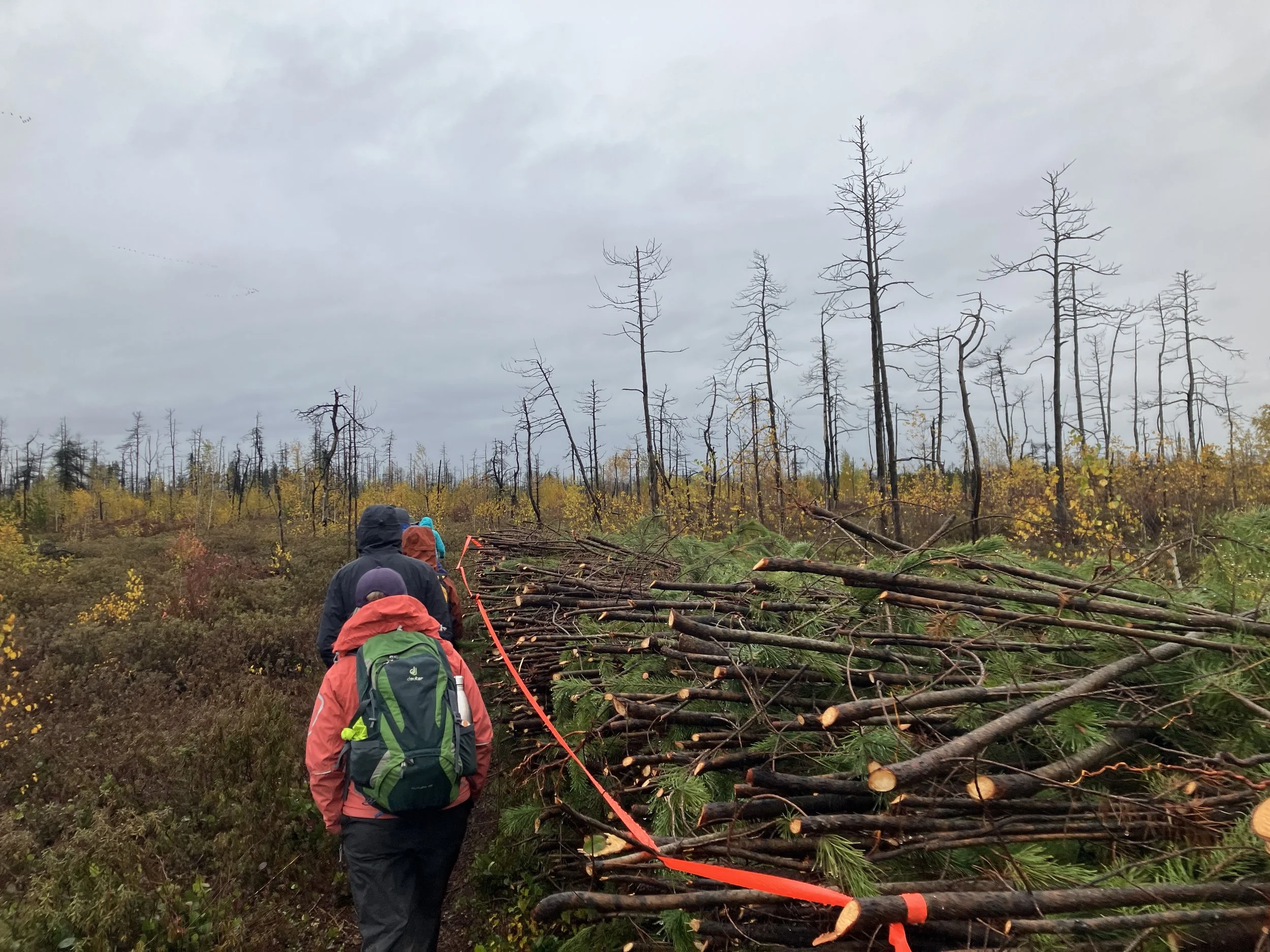
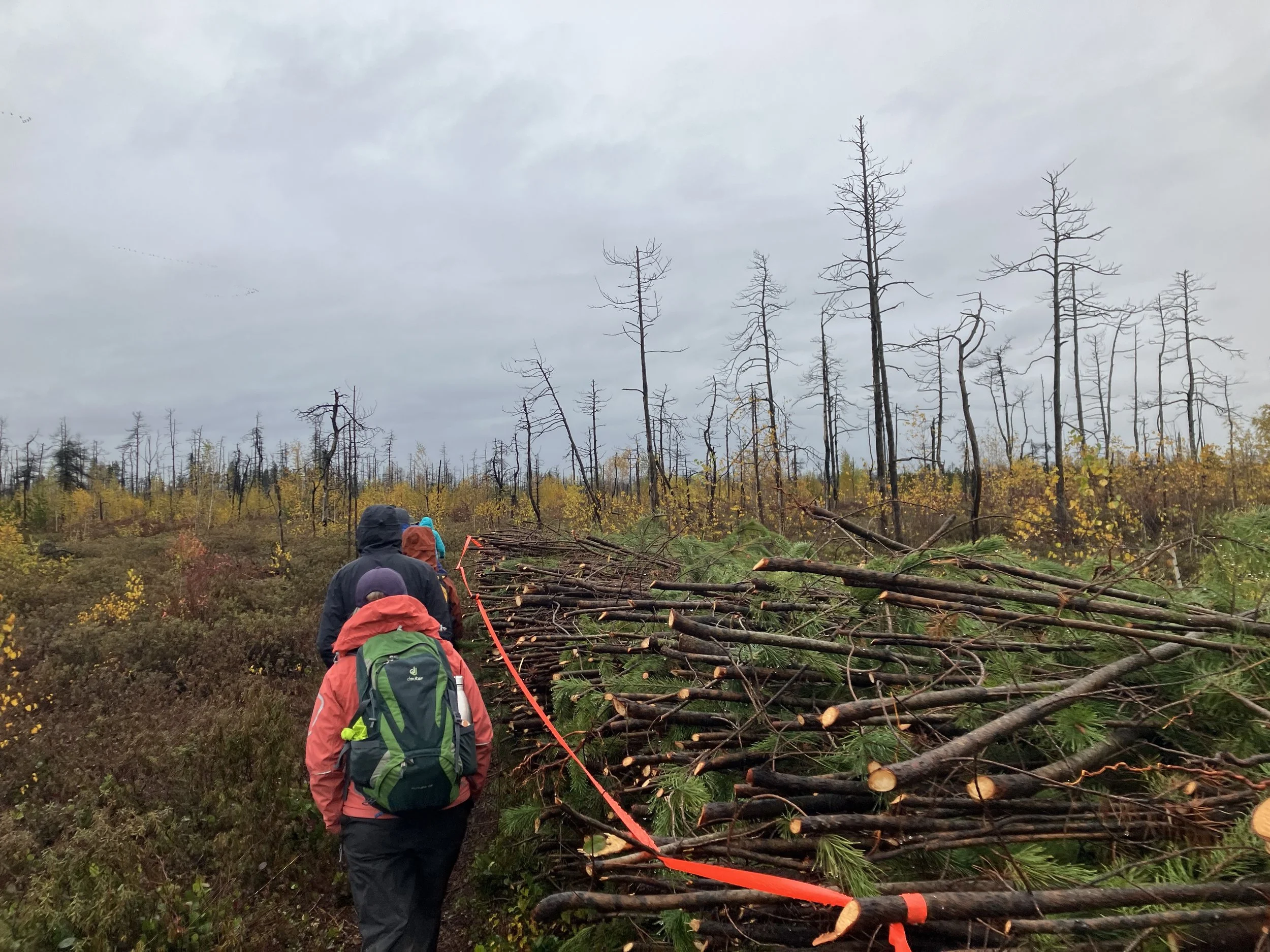
So Mendel, as you know, normally, bogs are too wet for anything but a few stunted trees to grow. But where we were walking, there were hundreds of dead burnt out tree trunks, and beneath them, thousands of stout little pine saplings.
Markus Merkens 37:36
If you look around us, you can see these burnt out trees. These are the trees that release the cones and seeds post fire. And if you look behind me, you can see the lodgepole pine stand very dense. If you have six trees in a square meter or square yard, you have 60,000 stems per hectare. So that's, that's a huge number of trees.
Mendel Skulski 38:03
Oh, my God. What is it with us and this season and cataloging the density of stands of trees?
Adam Huggins 38:09
I have no idea. Honestly, it is a through line. There were a lot of pines there.
Mendel Skulski 38:15
Yeah, what's up with that?
Adam Huggins 38:16
Well, when you start draining a bog, you make it a lot easier for trees to grow, because it was the water level that was keeping them out. And when trees start growing, they start transpiring water. Lots and lots of that water.
Markus Merkens 38:31
Trees are hydrological pumps. Pine is a weaker pump than other species, but in the aggregate, 60,000 stems per hectare push a lot of water out of the bog.
Adam Huggins 38:41
They suck water out of the ground.
Mendel Skulski 38:43
More sucking
Adam Huggins 38:44
And then things get even drier still, and then they catch fire and burn. And then the seed cones open, and 1000s more trees start to grow, and the vicious cycle continues.
Mendel Skulski 38:54
So what are they doing about it?
Markus Merkens 38:58
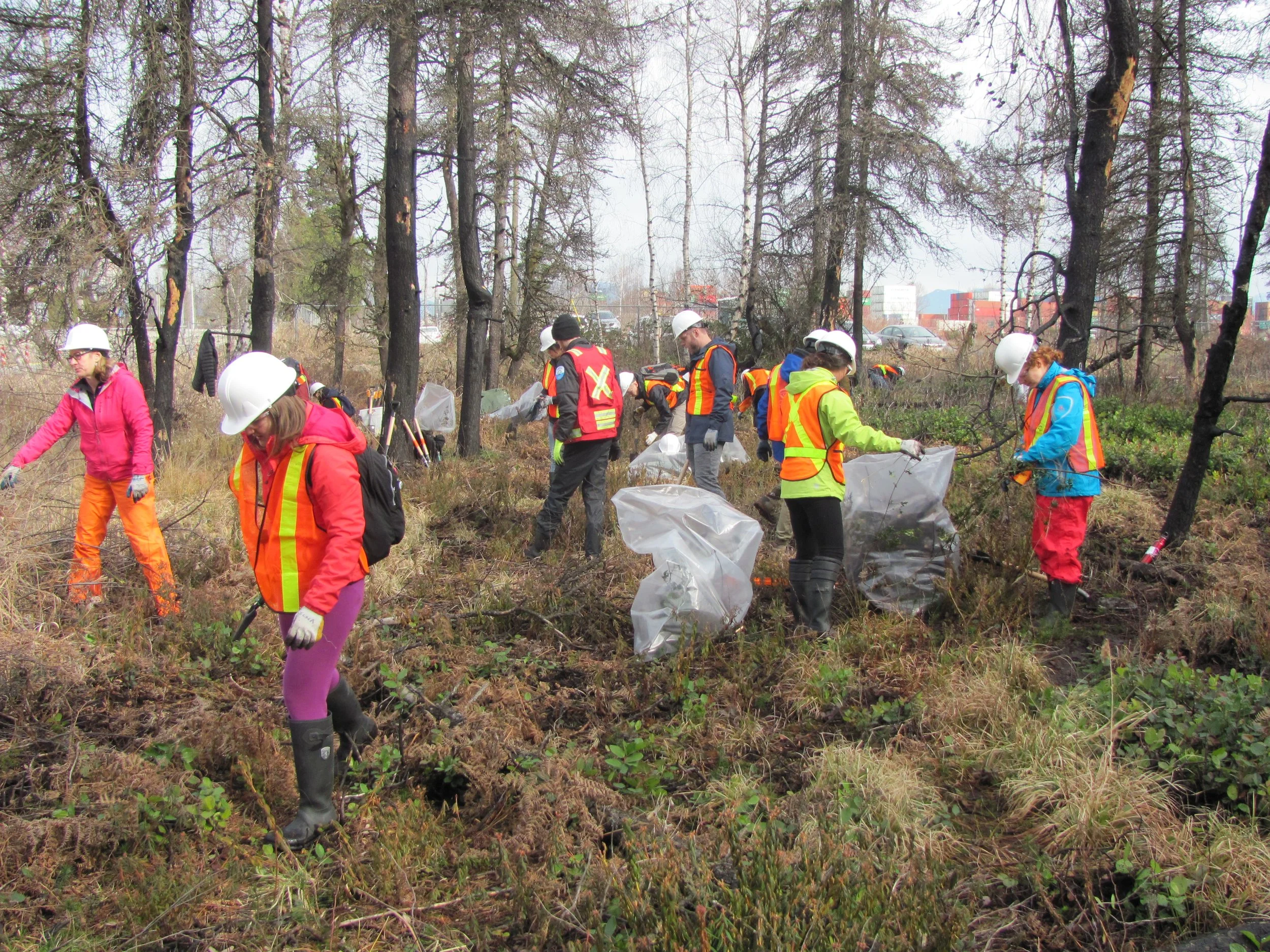
We physically remove by hand trees, now over a 19 hectare, or almost 50 acre section of the burn that happened, which was 37 hectares within the conservancy area. So very labor intensive.
Adam Huggins 39:15
They rip up and pile the trees. I pulled a few myself just to be helpful. You know?
Adam Huggins 39:20
Oh, that is delicious.
Mendel Skulski 39:32
...Are you eating cranberries again?
Adam Huggins 39:37
Possibly, but more to the point, the trees are only one part of the problem. Those old settler drainage ditches are still doing their thing.
Mendel Skulski 39:47
Ouch.
Adam Huggins 39:47
And as the bog is drying out, especially at the edges, the peat is subsiding away as it's being oxidized, with all of that carbon going back up into the atmosphere.
Mendel Skulski 40:00
Whoa. It's kind of like the bog is still burning, only on a slower time scale.
Adam Huggins 40:06
Yeah, you could definitely look at it that way. And this edge of the bog, also known as the lagg, is where organic peat meets the surrounding mineral soils. As Richard told me, it's really important.
Richard Hebda 40:20
You can't have a bog without a lagg. Essentially, the lagg is kind of like that transitional skin on your body. If you don't have that, if you just cut into the tissue and expose the raw flesh, you die, you scar right. The more cuts, the more it's bleeding, the less chance it has to survive. And so we need to stop the loss of water, in this case, the life blood of the bog.
Adam Huggins 40:47
Fortunately, Sarah Howie is an expert on laggs and how to revive them.
Sarah Howie 40:53
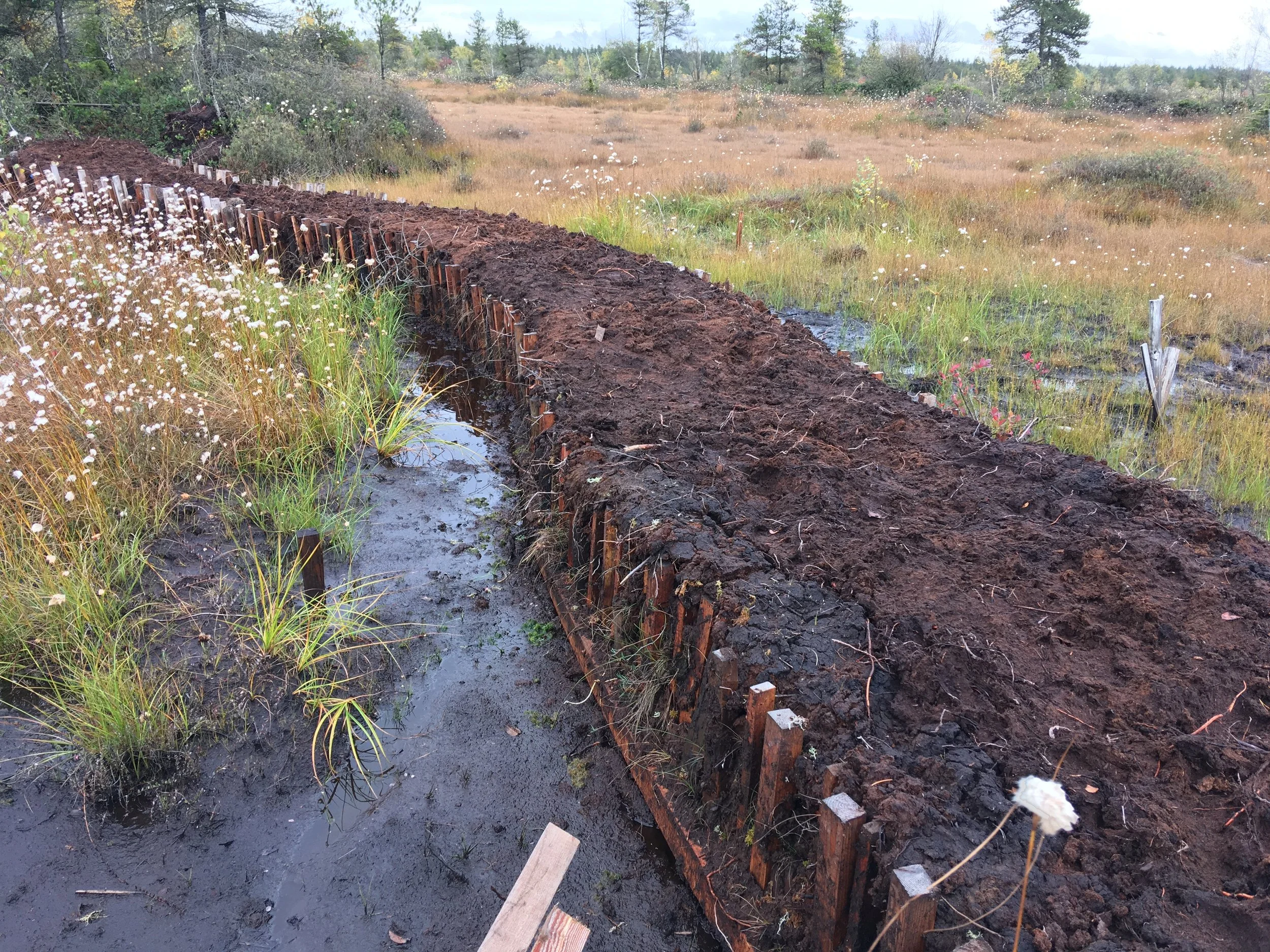
So Markus has been talking about his big tree seedling removal project. My project that I've been working on for 20 years is restoring the water table in the bog. So there's about 100 kilometers of drainage ditches that were put into the bog during the peat harvesting days. So we're trying to reverse that and stop those ditches from draining. So we've got these dams, about 479 dams, and almost all of them were built by hand, by people carrying materials and shovels into the bog, digging borrow pits of peat, filling the dams with peat, and actually using Coroplast boards like these ones, recycled election signs.
Mendel Skulski 41:36
Election signs?
Adam Huggins 41:37
Yes, even bog restoration is political, Mendel.
Speaker 1 41:40
After we would have a local election, they were really just going to dispose of them anyway, and so, yeah, they're buried. They're basically like sheet piling, and we use them to block the flow of water in the ditches and then cover it with peat so that the plastic is not exposed. It's buried basically forever in the peat.
Adam Huggins 41:58
Sarah says this works so well because the signs are really light and pretty tough, you can carry them into the bog on your back and create permanent ditch blocks.
Sarah Howie 42:07
And because we have to, you know, walk for kilometers sometimes to get to the places where we're working, that's the best material. And we actually ran this by our scientific advisory panel before deciding to put this plastic in the bog and and they said, because it's going to be buried essentially forever in the bog, it's inert. It's not contributing chemicals or nutrients. I mean, I don't love the idea of putting plastic out there, but it's buried, and it's not damaging the bog in any way.
Mendel Skulski 42:40
I guess sometimes practicality comes before romance. Are they also using, like, big heavy machinery excavators, like Robin?
Adam Huggins 42:50
At times, yeah.
Sarah Howie 42:51
It's actually the same excavator operator that was working for the peat harvesting folks, and now he's helping us with restoration.
Adam Huggins 42:59
Sarah told me that they've basically blocked off most of the ditches in the center of the bog, and so she's turned her attention to the lagg.
Sarah Howie 43:07
The next goal is to restore the edge, and that's probably going to take me to the end of my career.
Adam Huggins 43:13
But that's all right, because, as Richard told us, they have a 100 year restoration plan in place for the bog, and we're just a quarter of the way into it.
Richard Hebda 43:23
I think that in the 25 years that we've been doing this work and gathering more knowledge, it's as well and better than I had hoped for.
Adam Huggins 43:32
You can see that, especially in the middle of the bog.
Sarah Howie 43:35
The water levels are generally where they're supposed to be, within about half a meter of the surface,
Adam Huggins 43:42
But we are not out of the woods yet, not by a long shot.
Sarah Howie 43:46
The other issue that we're dealing with is climate change. So we've re-wetted the bog, we've raised the water table, and now we're getting drier summers, and so it's much hotter, and the water table is dropping.
Adam Huggins 43:58
And so Sarah will continue blocking ditches, and Markus will keep removing trees, and Drew and other researchers will continue to study the system, and hopefully, in the meantime, the bog doesn't go up in smoke.
Mendel Skulski 44:16
So it's great to hear that some level of recovery is possible, right? At least on a 100 year time scale. But it's clear that harvesting the peat from this bog, along with other disturbances, has had a pretty profoundly negative impact.
Adam Huggins 44:32
Which brings us back to the question that we started with. Can we justify harvesting peat from bogs so that we can use it to grow plants, say, native plants for restoration?
Mendel Skulski 44:46
To answer that question, we needed to talk to one more person.
Line Rochefort 44:50
My name is Line Rochefort, Professor in Restoration Ecology, holding a chair in Ecosystem Restoration, and also I'm the North American national expert at the RAMSAR Convention.
Mendel Skulski 45:05
Line is widely recognized as Canada's leading expert on peatland restoration
Line Rochefort 45:11
Canada, in terms of managing, caring for peatlands has a world responsibility, because we have a lot of carbon stock in our peatland, 34% of all the peatlands in the world are in Canada.
Mendel Skulski 45:27
followed by 33% in Russia. So between our two circumboreal nations, there are two thirds of the world's peatland, which is a lot of carbon. Now Lynn is quick to point out that peatland destruction is a serious issue at a global and a regional level, especially in the more developed parts of southern Canada.
Adam Huggins 45:50
Like the Fraser Valley, where Burns Bog is located.
Mendel Skulski 45:54
But overall, she says of Canada's total 128 million hectares of peatland, only a tiny fraction have been directly impacted, estimated at less than 2%
Adam Huggins 46:07
These and the numbers that follow are from the 2022 UN Global Peatlands Assessment, by the way.
Line Rochefort 46:13
So in Canada, if we go by order of impacts through time, we have drained for agriculture, 1.3 million hectares of peatland.
Adam Huggins 46:23
About and after agriculture, the next biggest impact to Canadian peatlands is actually the fossil fuel industry.
Line Rochefort 46:30
Second in line is the oil and gas and we don't have national statistics about all our impacts, but we do know that it's about 400,000 hectare. So, it's an order of magnitude less than what happened with agriculture.
Mendel Skulski 46:46
And after fossil energy, next comes hydro electricity.
Line Rochefort 46:51
Hydro dams. So a lot of flooding in peatland rich area, be it in Quebec, Newfoundland, Manitoba,
Mendel Skulski 46:57
And then it's good old fashioned drainage.
Line Rochefort 47:01
Some drainage for forestry, for urban expansion, road development.
Adam Huggins 47:06
And finally, we have the subject of our inquiry, peat extraction for peat extraction's sake.
Line Rochefort 47:14
One of the least is using it for peat. Since 1931, about 38,000 hectare.
Adam Huggins 47:20
In other words, the area of peatland that has been impacted by harvesting for horticultural uses is absolutely dwarfed by the area impacted by agriculture, oil and gas and other forms of development, all of which has only impacted a small portion of the bogs in Canada. But even so, when you go to the store and buy a bag of peat, chances are good that it's coming from right here in Canada.
Line Rochefort 47:47
Canada is one of the biggest peat producer in the world. The use of peat in Canada is really in horticulture. 85% is sold in the United States. It's for the professional grower in greenhouses, cucumber, green pepper, tomatoes and the mushroom industry.
Adam Huggins 48:06
So for Canada, peat is largely an export industry. Historically, some of that peat was harvested from bogs in Western Canada, like Burns Bog, especially after the Second World War. But for the most part today, that peat is coming from the vast boreal peatlands of central and eastern Canada. And before we continue, it's important to mention that much of Line's research has been funded and undertaken in partnership with the horticultural peat industry — something that she is proud of.
Line Rochefort 48:37
What I would say is that it's an industry that really care about managing the resource, because it's really their living and usually they are family based, type of companies also the been investing since the end of the 80s to develop peatland restoration measure or to manage better. I have always been a big believer that it's good that more biologists, environmentalists and on that should work with industry to find solutions.
Mendel Skulski 49:05
So Line is sympathetic to her industry partners. And to be fair, they've come a long way together.
Line Rochefort 49:13
Before I started, nobody knew how to manipulate masses on a large scale with machines without killing everything.
Adam Huggins 49:21
To address this, Line and her colleagues in the Peatland Ecology Research Group eventually developed what has become known internationally as the Moss Layer Transfer Technique. To make a long story short.
Line Rochefort 49:34
Uh... it's very technical, but in peatlands, we have two hydrological layer one is called the acrotelm, the other one the catatelm.
Adam Huggins 49:43
The catatelm is the thick mass of dead peat that's typically below the water table and storing most of the carbon.
Mendel Skulski 49:50
And the acrotelm is the thinner layer composed largely of living peat on the surface, kind of like your skin. No wait, kind of the opposite of your skin. Kind of like a tree. Wait, no, kind of the opposite of a tree. It's pretty different.
Adam Huggins 50:05
Yeah. So it's the first 10 or so centimeters of the acrotelm
Line Rochefort 50:10
Where there's all the propagules — spores, seeds.
Adam Huggins 50:15
Everything you need to catalyze the recovery of a bog that's been harvested.
Line Rochefort 50:19
Once you have a peatland that's been drained for maybe 20 years, we need, usually to reprofile to a fresh peat, because we really need to have a good contact by capillary rise of the water.
Adam Huggins 50:31
And so the top 10 centimeters of acrotelm is collected from a donor site, usually the next site to be harvested, and then is spread on top of the restoration site.
Line Rochefort 50:42
So once we spread all our material, then we need to protect it with a straw mulch. Usually that we use, it's to create a microclimate, because the mosses have no roots.
Mendel Skulski 50:51
And in addition to straw mulch, they add phosphorus.
Line Rochefort 50:55
Because phosphorus is good. It's not necessarily there to help the sphagnum, but it's another moss that we need a nursing plan. We call it polytrichum.
Adam Huggins 51:04
Go into any bog, and amidst all that fluffy sphagnum, you're likely to see other mosses, including the pointier polytrichum, looking like a miniature palm tree. Or as Line calls them, little aloes.
Line Rochefort 51:19
Or pineapple, because they have all these spikes along the edge.
Adam Huggins 51:25
I found this aspect particularly fascinating. Line and her colleagues have discovered that a little bit of phosphorus really helps polytrichum to establish in the transplanted sphagnum. And this polytrichum is much taller than the sphagnum
Line Rochefort 51:39
So that's why, if you get this polytrichum, nice carpet to establish, then it binds the peat and also creates a nice microclimate.
Adam Huggins 51:48
And that miniature forest of polytrichum protects the sphagnum moss from destruction through frost heaving, which otherwise can be really damaging in northern climates.
Line Rochefort 51:59
The sphagnum survive there, like, you know, in the shadow, but they take over because they are a co-engineer type of organism.
Mendel Skulski 52:07
That's so cool.
Adam Huggins 52:08
Yep. And then the last step, you re-wet the bog.
Line Rochefort 52:12
You have to re wet. You have to block the ditches.
Mendel Skulski 52:15
And that's about it. Presto. There's a functional bog, once again.
Line Rochefort 52:20
Yes, we do get the bog at the end of it, we have a rate of 75% success.
Adam Huggins 52:26
Based on Line's monitoring work. It takes about nine to 12 years for the bog to once again become a carbon sink, and about 20 years to fully offset the carbon cost of the restoration.
Line Rochefort 52:38
The biodiversity in terms of vascular plants, we know that after five years, we're getting 82% back. What does not come back easily is like orchids, but you know, they have a complicated reproductive cycle.
Mendel Skulski 52:54
So it's pretty good, but not perfect.
Adam Huggins 52:59
Restoration just never is. But as far as Line is concerned,
Line Rochefort 53:04
in Canada, sphagnum-dominated peatland restoration is close to a solved problem.
Adam Huggins 53:11
She's now turned her attention to the restoration of fens, which are a different kind of peatland, and to mitigating the impacts of wildfire on peatlands, which is an emerging and very pressing issue.
Mendel Skulski 53:24
Yes, so to return to our question, what does Line think about using peat for restoration and for horticulture?
Line Rochefort 53:32
Well, I see peat. It's a bit hard to replace for now, I think we should not stop ourselves from finding solution of other growing substrate.
Adam Huggins 53:44
But she argues, all of the alternatives currently on the market have their own issues. Wood chips, for example, are not a great replacement.
Line Rochefort 53:54
Productivity when you're using just wood chips goes down quickly, when you don't have at least mix with some sphagnum.
Mendel Skulski 54:02
and rock wool, also used in home insulation, takes a lot of energy to produce and isn't biodegradable.
Line Rochefort 54:09
Piles of things that goes in the dump, do not decompose.
Adam Huggins 54:13
Coconut coir, while it is a byproduct of palm plantations in India and Sri Lanka, has serious labor land use, water use and transportation issues to consider.
Line Rochefort 54:25
Coconut fiber, it is a good growing substrate, but it's it's ecological footprint. You really have to look at your whole life cycle analysis,
Mendel Skulski 54:35
Plus something we weren't even thinking about, perlite, which is often used in soil mixes, is a mineral which itself is extracted and processed in a very energy intensive way.
Line Rochefort 54:47
Make sure you don't do mixes with perlite, because the perlite, if ever it goes in the environment, it floats and then amphibian can choke on that.
Adam Huggins 54:59
Line pointed us to the only peer-reviewed study that we could find specifically on our question, which performed a life cycle analysis of the environmental impacts of peat extracted in Latvia compared to imported rock wool and coconut coir. Latvia, incidentally, also exports about 85% of its peat, just like Canada. The researchers found that the full life cycle impact of coconut coir was seven times higher than that of peat. Rockwool, significantly better than coir, but still higher impact than peat.
Mendel Skulski 55:35
To our knowledge, there is yet to be a similar study on Canadian peat, but it's likely that the results would be pretty similar. So it would appear that all of the commercial alternatives to peat for horticultural use are at best, flawed and at worst, worse.
Adam Huggins 55:55
Still, does that mean that we should be using it? We asked some of the other folks that we spoke to. This is Drew again.
Drew Elves 56:04
I bought peat for the first time in my life this past spring, and it was because we were planting bog Labrador Tea in this small pocket bog, this engineered bog in a Place of Medicine at UVic. How did it feel? Really complicated.
Mendel Skulski 56:20
And Richard is an interesting case, because in addition to being a bog restorationist, he's also a serious horticulturalist. Besides Burns Bog, his other big project is studying the productivity of potatoes under climate change. And he strikes a cautious note on the subject of peat.
Richard Hebda 56:41
I think for certain kinds of horticultural uses, sphagnum peat is the best choice, and that would be things like rhododendrons, things that require acidic environments.
Adam Huggins 56:56
As for the alternatives, he acknowledged that there are lifecycle issues, but he turned the question on its head a bit.
Richard Hebda 57:04
What's renewable on a short time scale? Coconut husks, not sphagnum moss on peatlands.
Adam Huggins 57:13
And while he recognized the work of Line and others in this area
Richard Hebda 57:17
Dr Rochefort has shown, yes, you can recover small scale excavations of peat and bring back peat species, but you have very strong constraints on what you can do.
Adam Huggins 57:30
He also argues that what is lost is more than just carbon dioxide.
Richard Hebda 57:35
the consequences on large areas of feed land being harvested for peat takes away millennia of organic matter accumulation and disturbs that PEAT ecosystem. And on the basis of what we need to use peat as just as an organic matter in soil, I think it's not appropriate, not for large scale. This is where we need to be growing all kinds of organic matter and returning it to the ground and into our ecosystems.
Adam Huggins 58:05
Like compost, he says. Lots of compost. It's not a perfect peat substitute for some uses, but for others, it definitely gets the job done.
Mendel Skulski 58:15
Yeah, I think we can all get behind that. So to finally summarize the answer to our question, synthesized from all of these conversations, in the style of Michael Pollan, use peat, not too much, and whenever possible, use compost instead.
Adam Huggins 58:37
And if you do use some peat, always keep in mind that what you're using is part of a super organism.
Richard Hebda 58:45
The bog is a quintessential embodiment and example of what goes on all over the natural ecosystems of our Earth. So the hydrosphere, the water table, the atmosphere, the source of the rain and the oxygen that they need, the carbon dioxide that they need, the Geosphere, the physical substrate upon which the conditions are such that the sediments, the peat, can accumulate to support all the living creatures, the living creatures of the raised bog, which you can draw a circle around. It's a porous boundary, but there is a boundary, and you can see it and understand it as a physical structure living in equilibrium, a dynamic equilibrium, that it's shaping for itself with the hydrosphere, the atmosphere and the Geosphere. And now we face the greatest challenge of all — where the social sphere is now of a scale equal to the other four spheres in terms of shaping the land, but not in equilibrium. And what's the fundamental lesson from those other four spheres? They will bring us back into equilibrium. And we all have to take responsibility to speak for them. To listen to them and speak for them.
Mendel Skulski 1:00:25
In this episode, you heard the voices of Robin Annschild, Richard Hebda, Drew Elves, Markus Merkens, Sarah Howie, and Line Rochefort. Music by yours truly, Thumbug, and Sunfish Moon Light.
Mendel Skulski 1:00:42
Special thanks to the Wetland Project, Brady Marks and Mark Timmings for letting us use a clip from their incredible 24 hour recording of a marsh on ṮEḴTEḴSEN Saturna island, on unceded W̱SÁNEĆ territory. And to the organizers of the 2024 SER North American Conference, Tony Ballard specifically, thanks.
Mendel Skulski 1:01:07
If you like what we do here, you can help us do more. Check out futureecologies.net/support to find out how. Thanks to all of our patrons who keep us independent and ad free, we just could not do it without you. This episode was produced by Adam Huggins, and me, Mendel Skulski, with help from Eden Zinchik. And as always, you can find a transcript and citations on our website, futureecologies.net. That's it for this one. We'll see you soon.